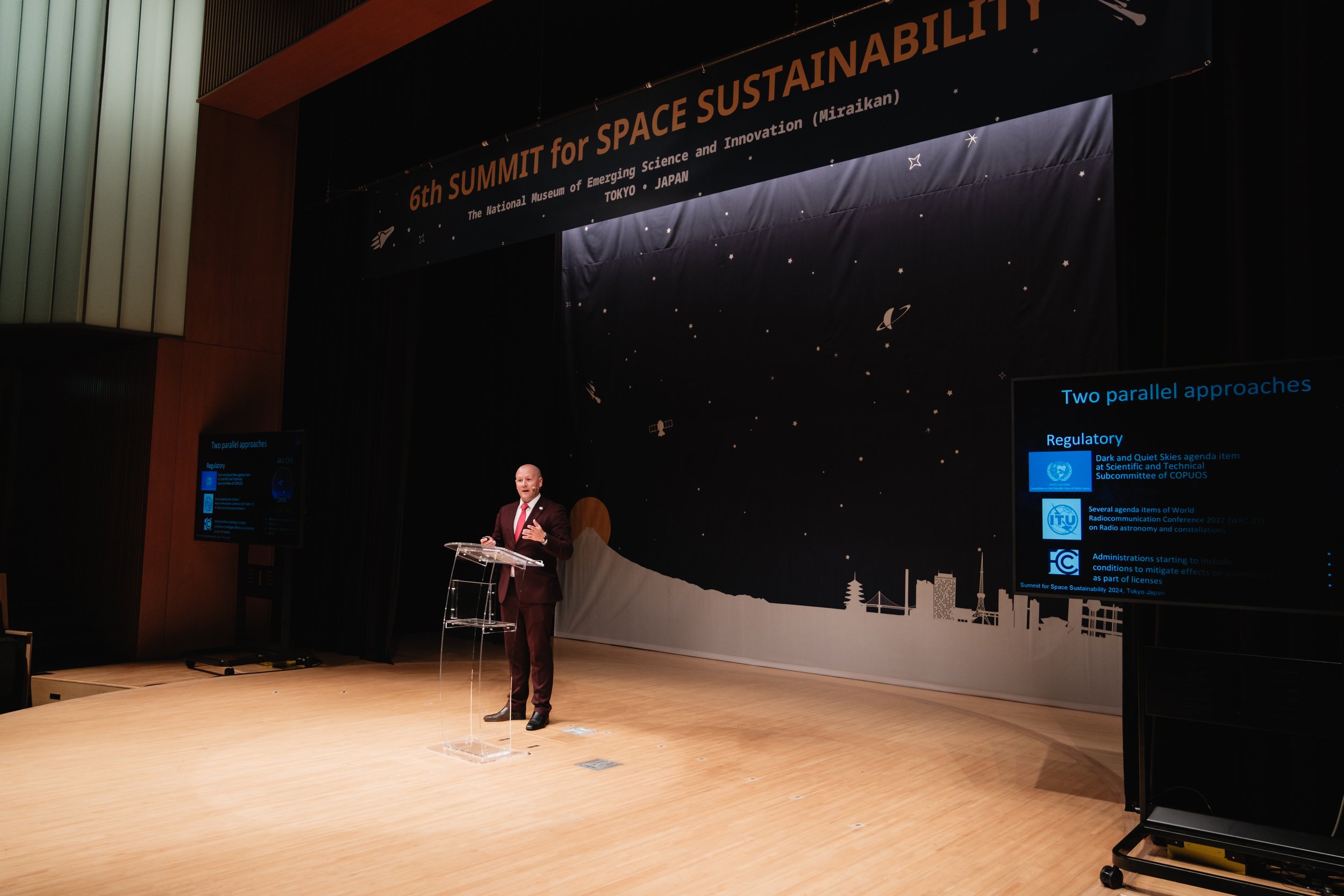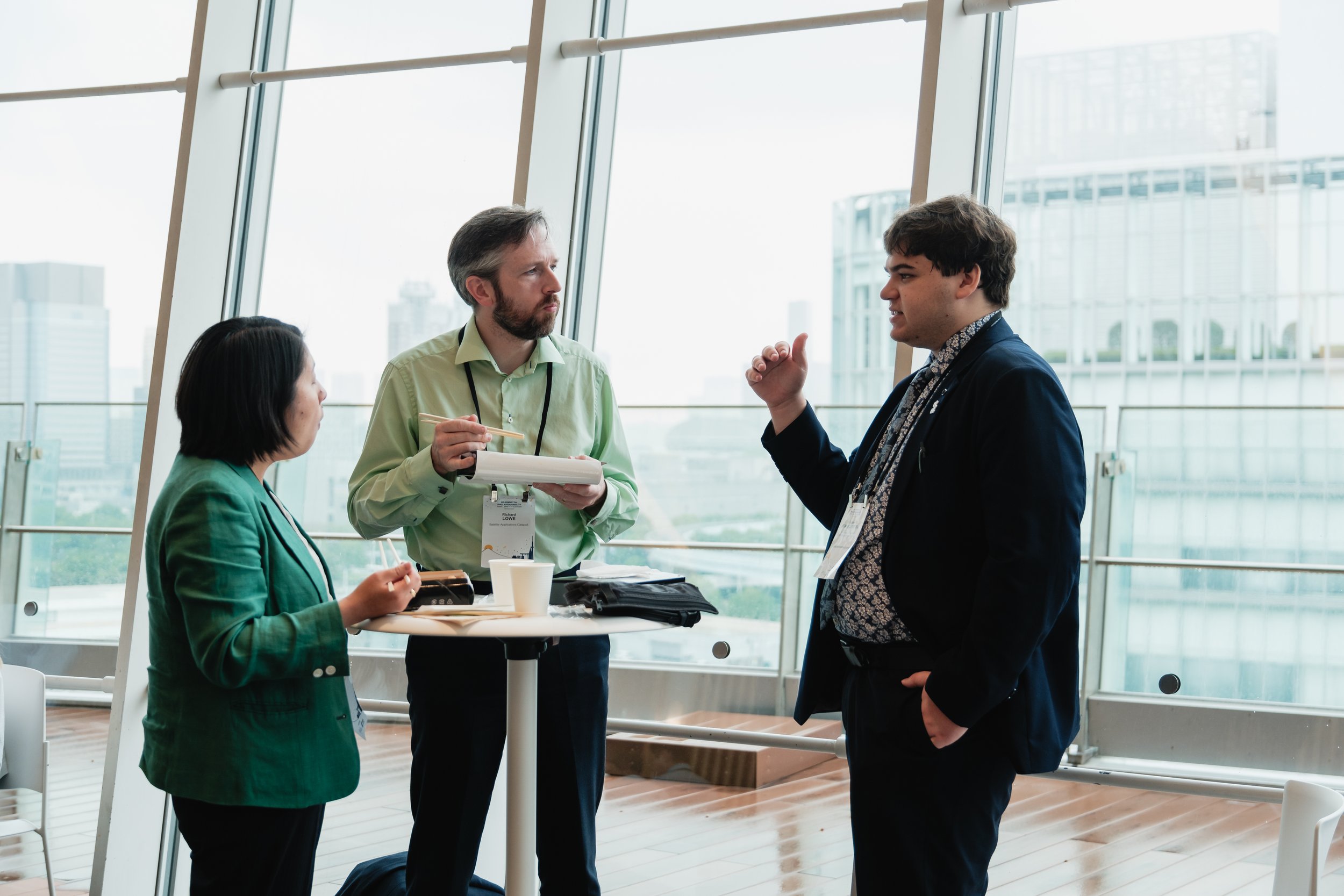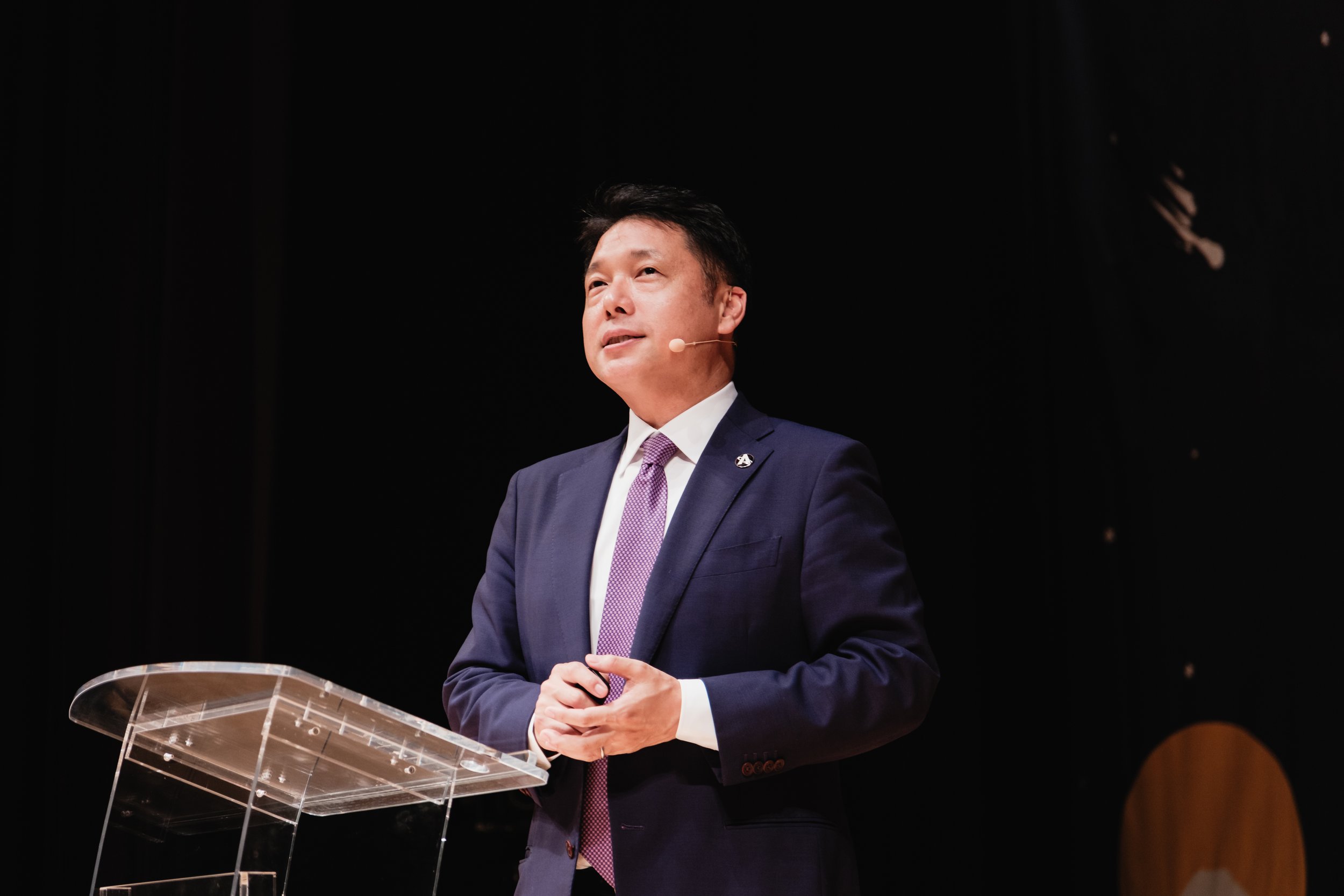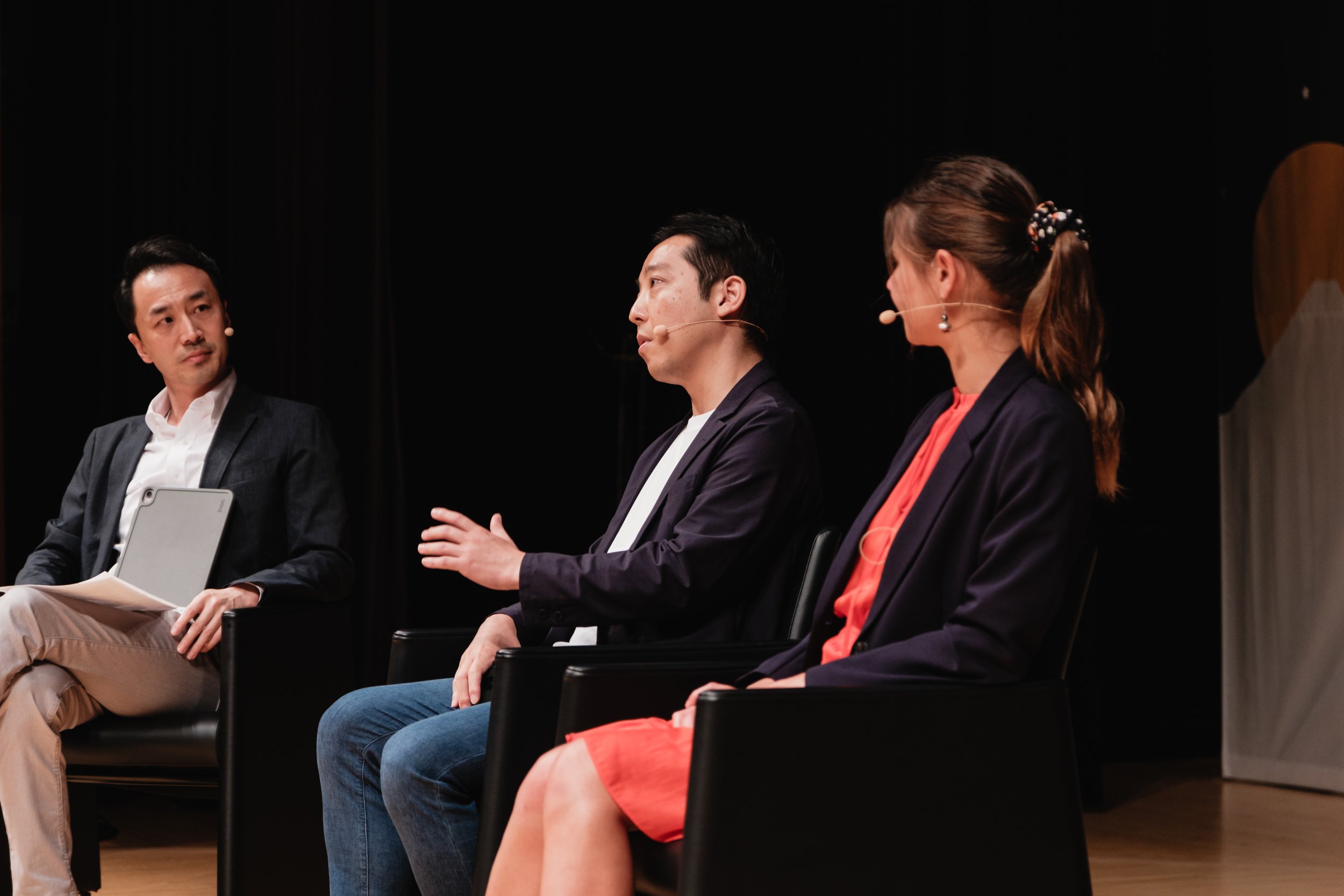
6th Summit for Space Sustainability
July 11-12, 2024
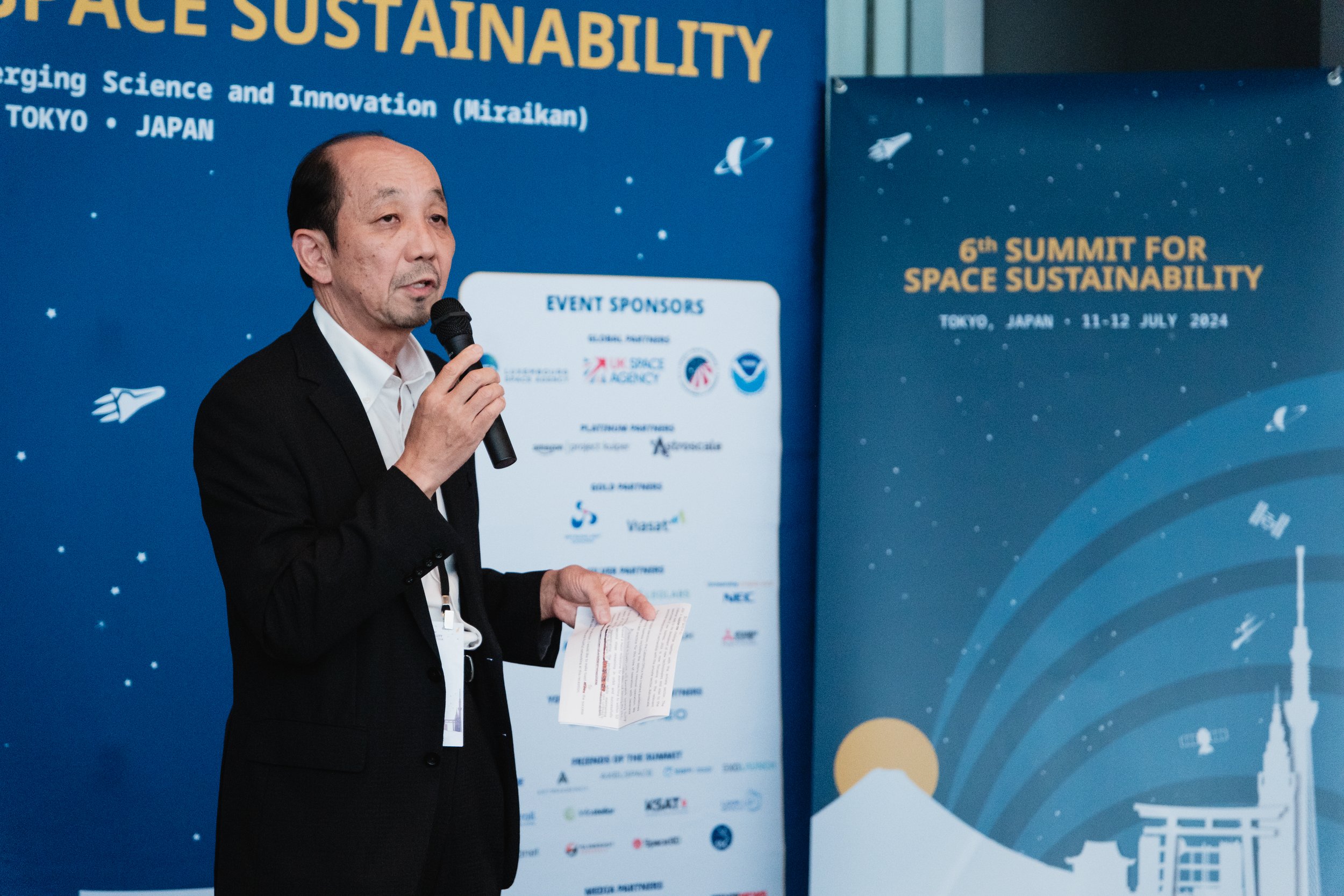
Venue: Tokyo at The National Museum of Emerging Science and Innovation (Miraikan)
Event Summary
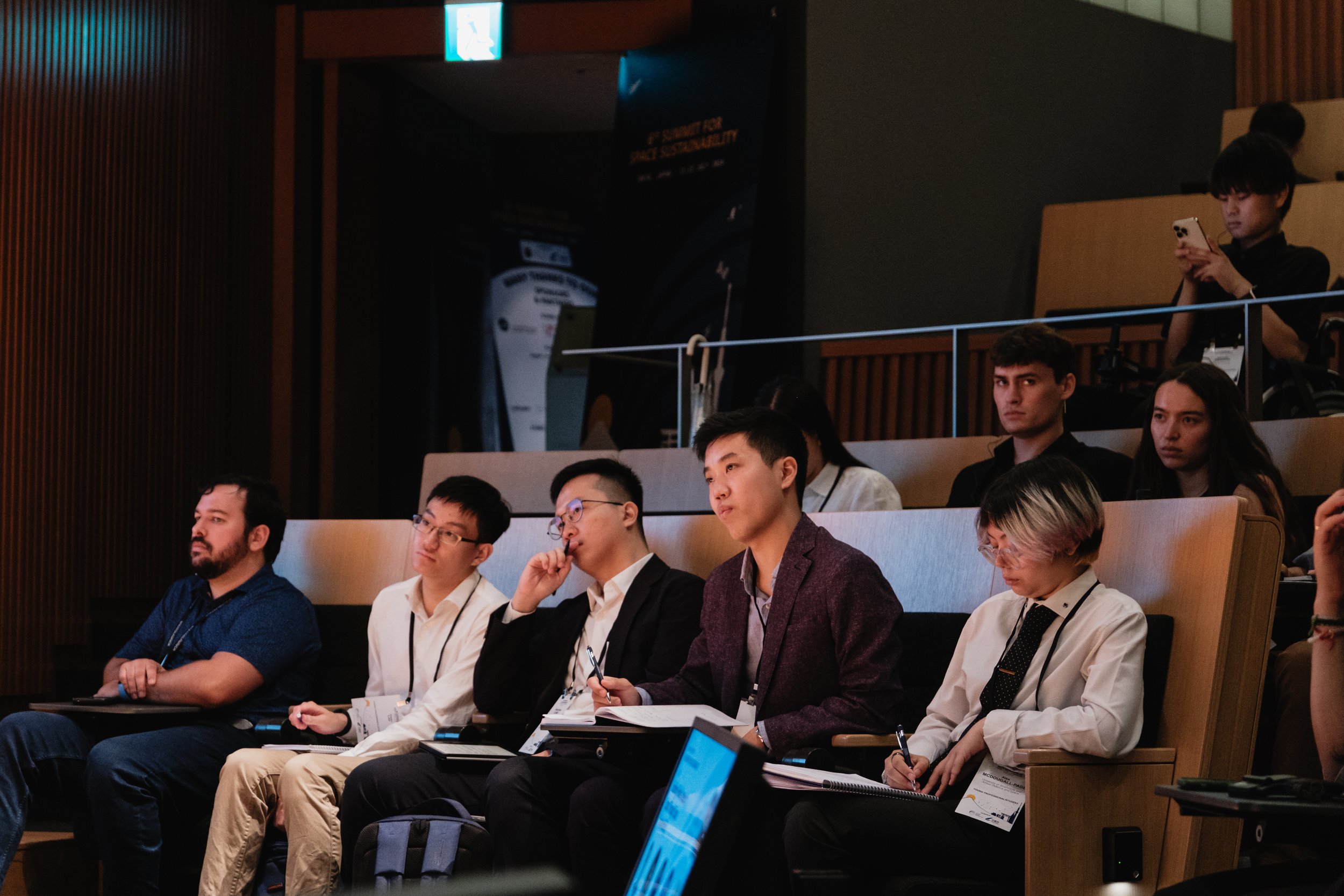
Co-hosted by the Secure World Foundation and Cabinet Office, Space Policy Secretariat, Government of Japan, the 6th Summit for Space Sustainability was a high-level, multi-day policy forum attended by more than 500 people.
With a strong focus on initiatives, trends, and perspectives from the Asia-Pacific (APAC) region, the Summit highlighted opportunities and challenges for developing solutions for space sustainability. The 6th Summit for Space Sustainability was held in coordination with the APAC’s leading commercial space conference, SPACETIDE 2024, which will took place in Tokyo from July 8-10, 2024.
All sessions from the Summit were recorded and are available publicly on the Secure World YouTube Channel. Individual sessions can be viewed from the links below.
Through a mix of keynotes, panels, and spotlight talks, key themes discussed included:
Active debris removal progress and challenges
Regional space situational awareness initiatives and their connection to global efforts
The intersection of civil, security, and commercial space, including regional perspectives on responsible space behavior
New partnership models, benefits, and sustainability challenges presented by space exploration activities
The role of sustainability in space-related finance activities
The roles of forums such as the ITU, COPOUS, regional bodies, and private sector initiatives in a multi-faceted space governance system

6th Summit for Space Sustainability Wrap-Up Report
Explore the outcomes and next steps from the 6th Summit for Space Sustainability in our detailed wrap-up report. This document captures the actionable conclusions and future directions as determined by panels, spotlight speakers, and keynote presentations and interviews, emphasizing collaborative strategies for enhancing space sustainability.
Review the report to engage with the concrete steps identified for advancing the sustainability of space operations.
Agenda
6th Summit for Space Sustainability | Tokyo, Japan | July 11–12, 2024
All times are Japan Standard Time (JST, UTC+9).
Thursday, July 11, 2024
Registration And Networking Breakfast
Session details
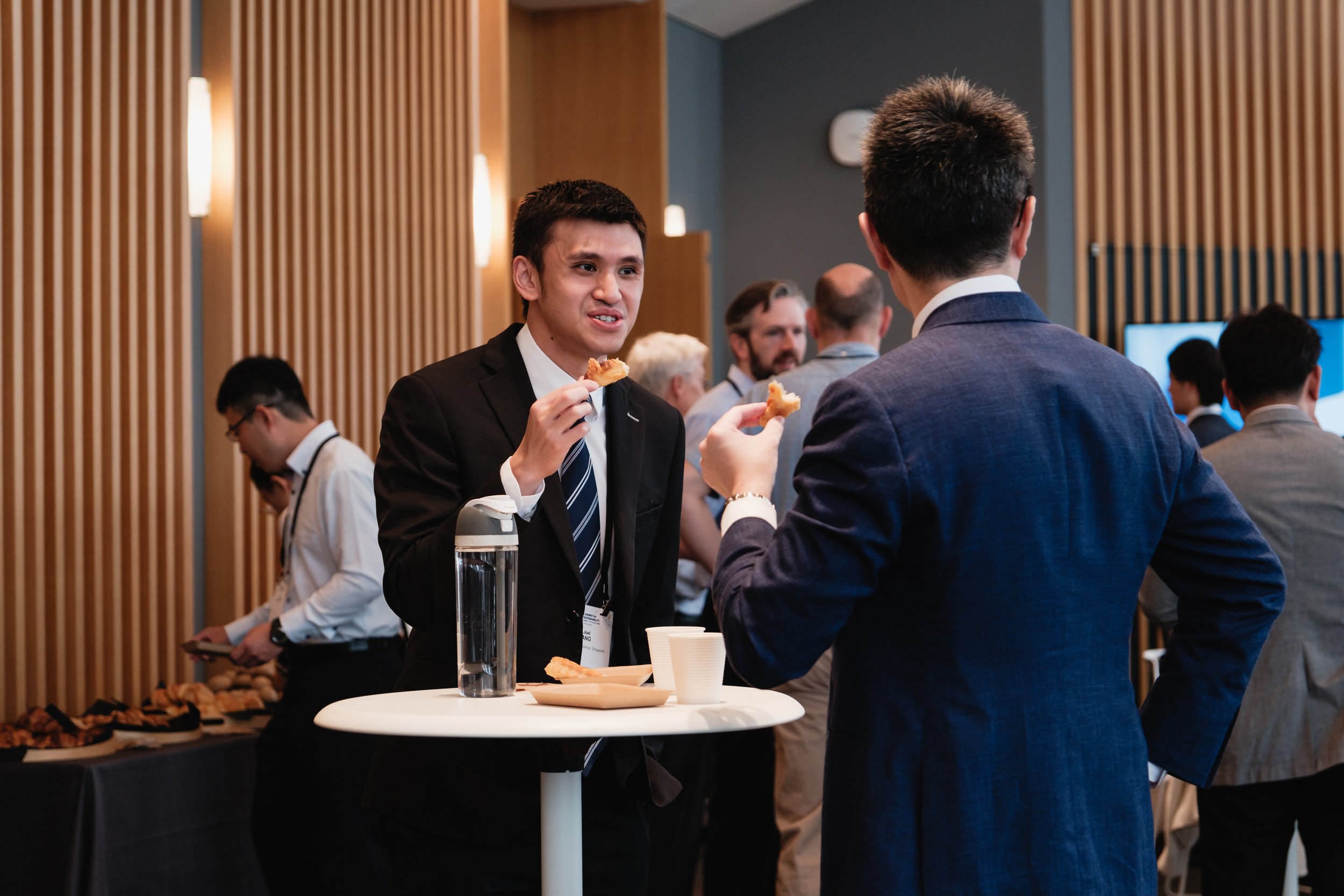
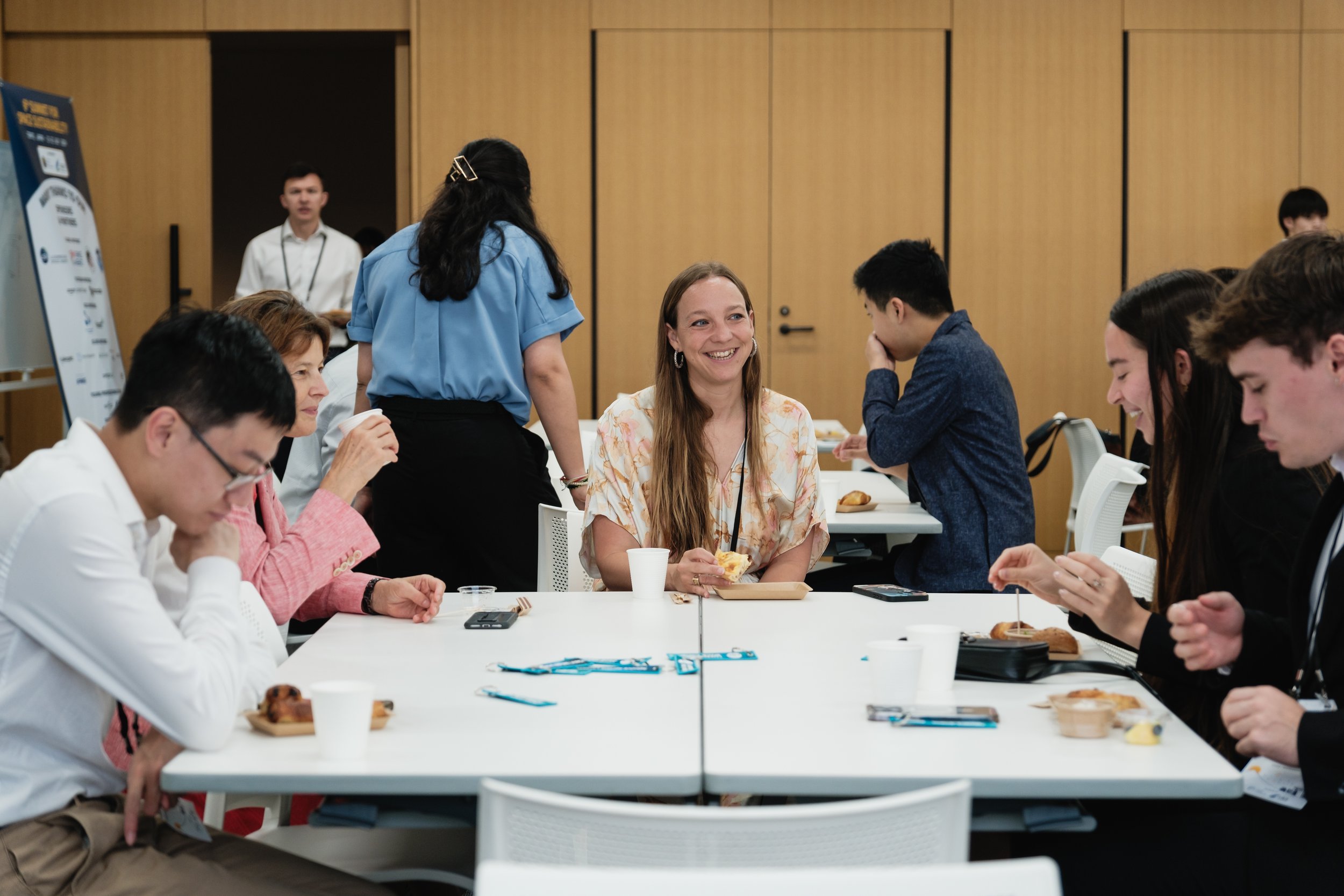
All in-person attendees are invited to check-in and enjoy a continental breakfast.
Opening Session
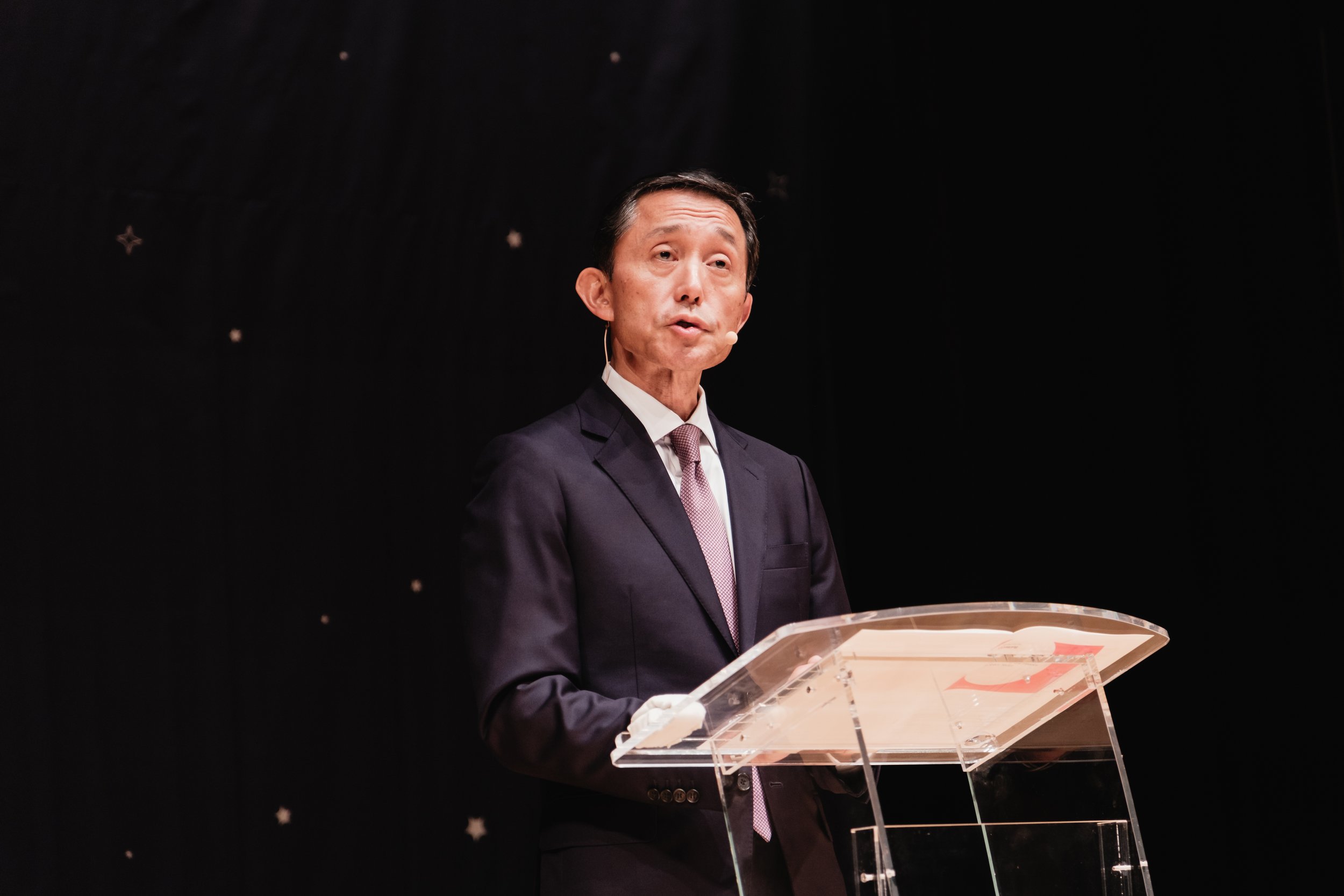
- Jun Kazeki, Director General, National Space Policy Secretariat, Cabinet Office, Government of Japan
- Peter Martinez, Executive Director, Secure World Foundation
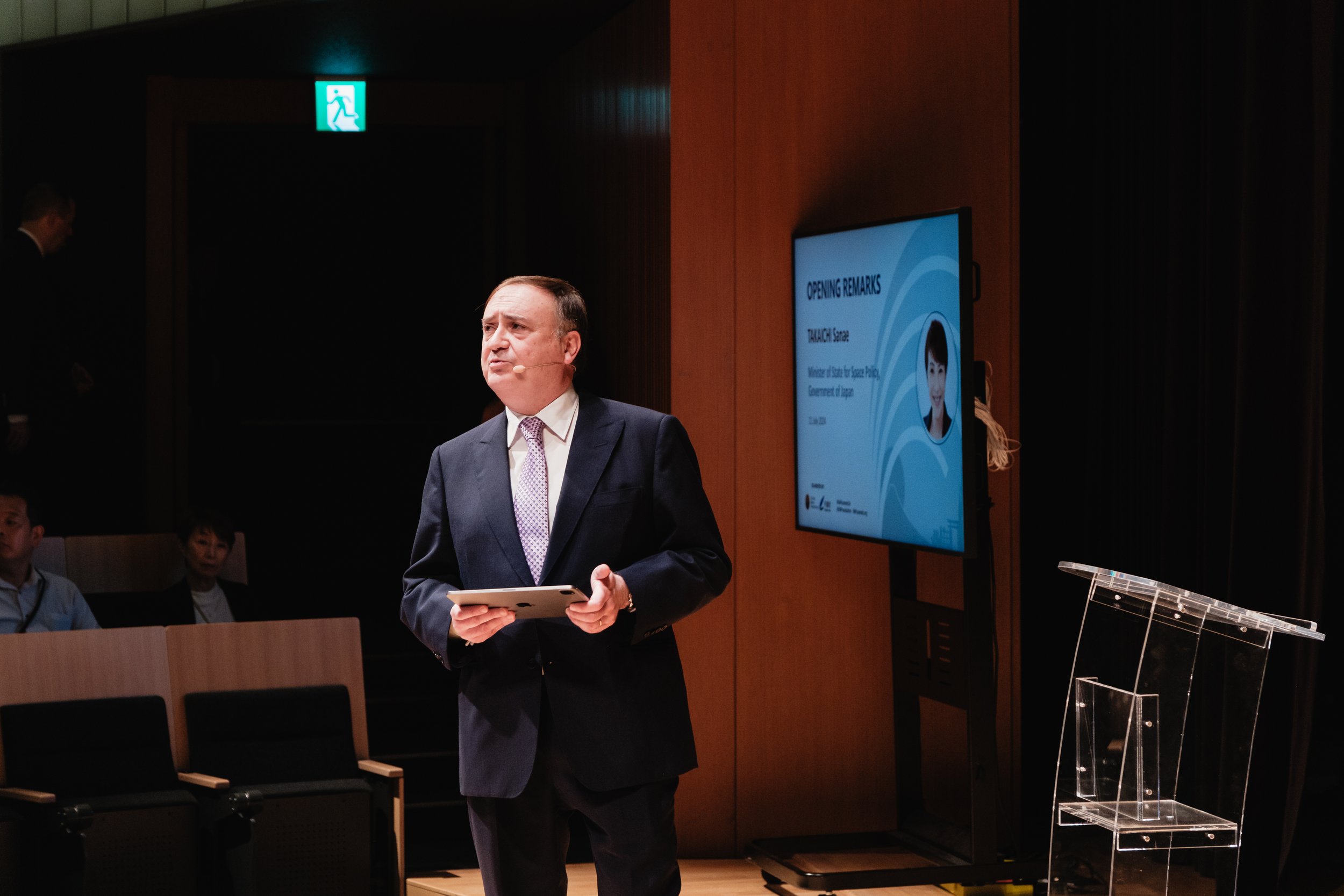
Opening remarks (virtual): Sanae Takaichi, Minister of State for Space Policy, Government of Japan
Session details
Summit opening remarks will be delivered virtually by TAKAICHI Sanae, Minister of State for Space Policy, Government of Japan. These remarks will be followed by remarks from KAZEKI Jun (Director General, National Space Policy Secretariat), and Dr. Peter Martinez (Executive Director, Secure World Foundation).
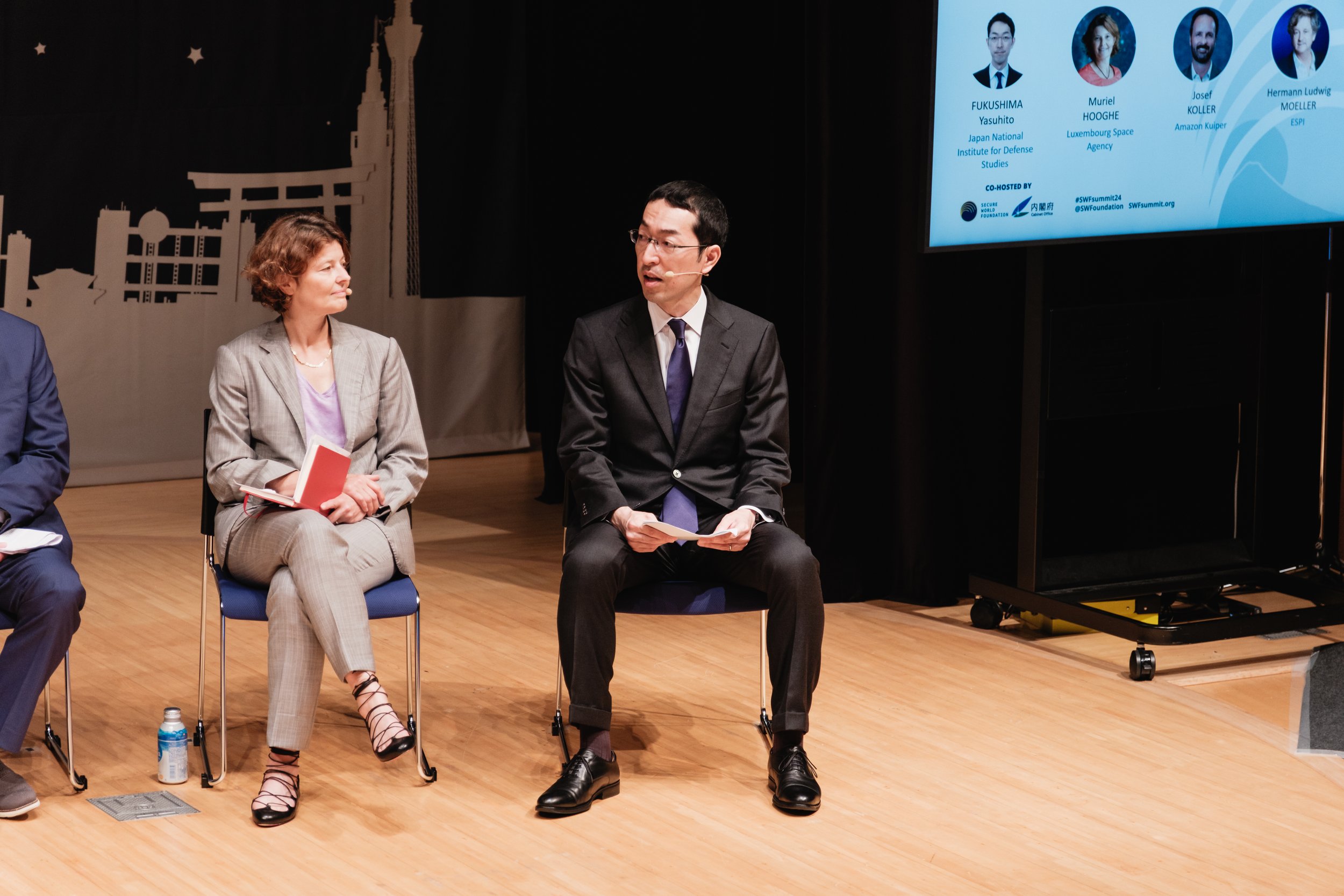
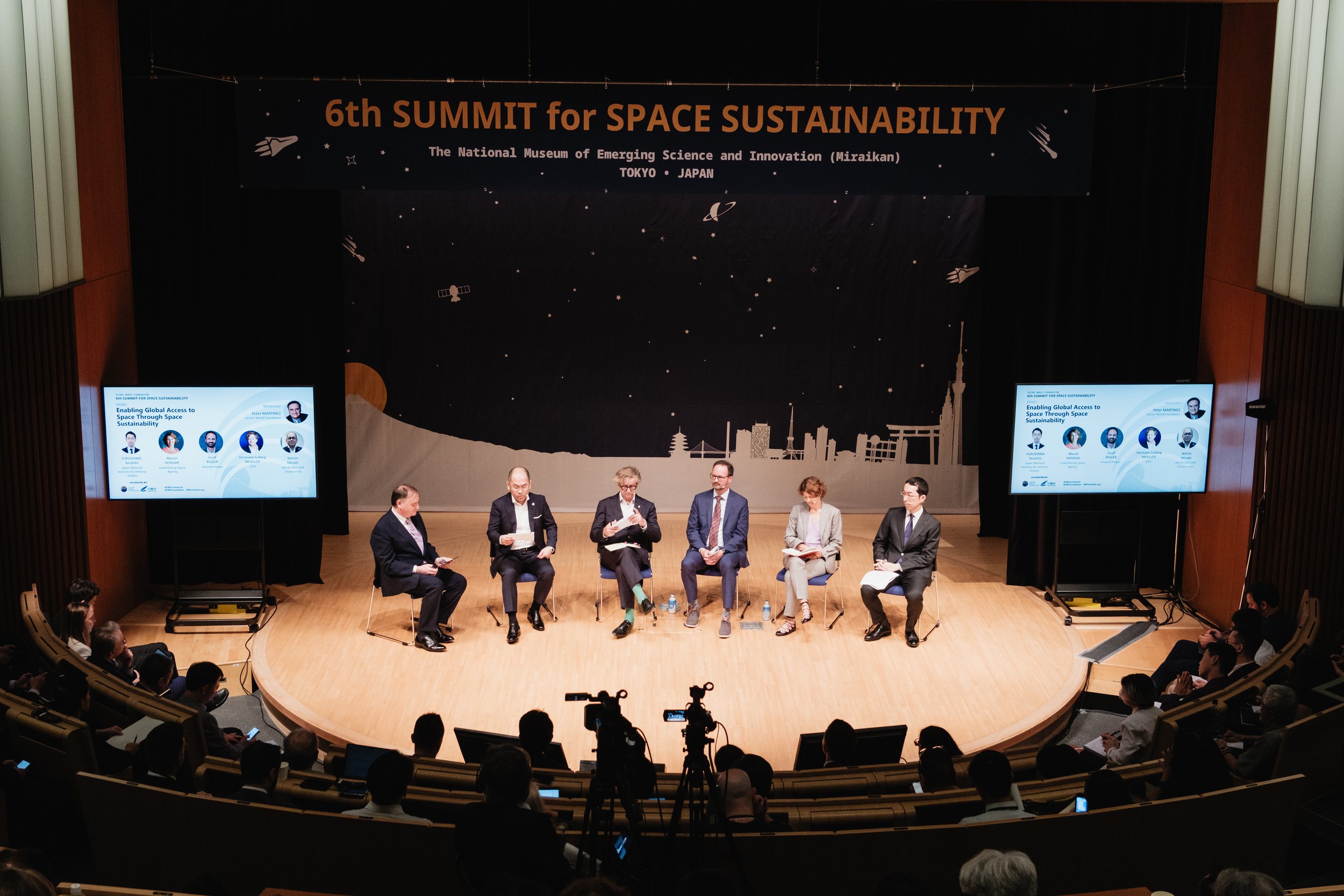
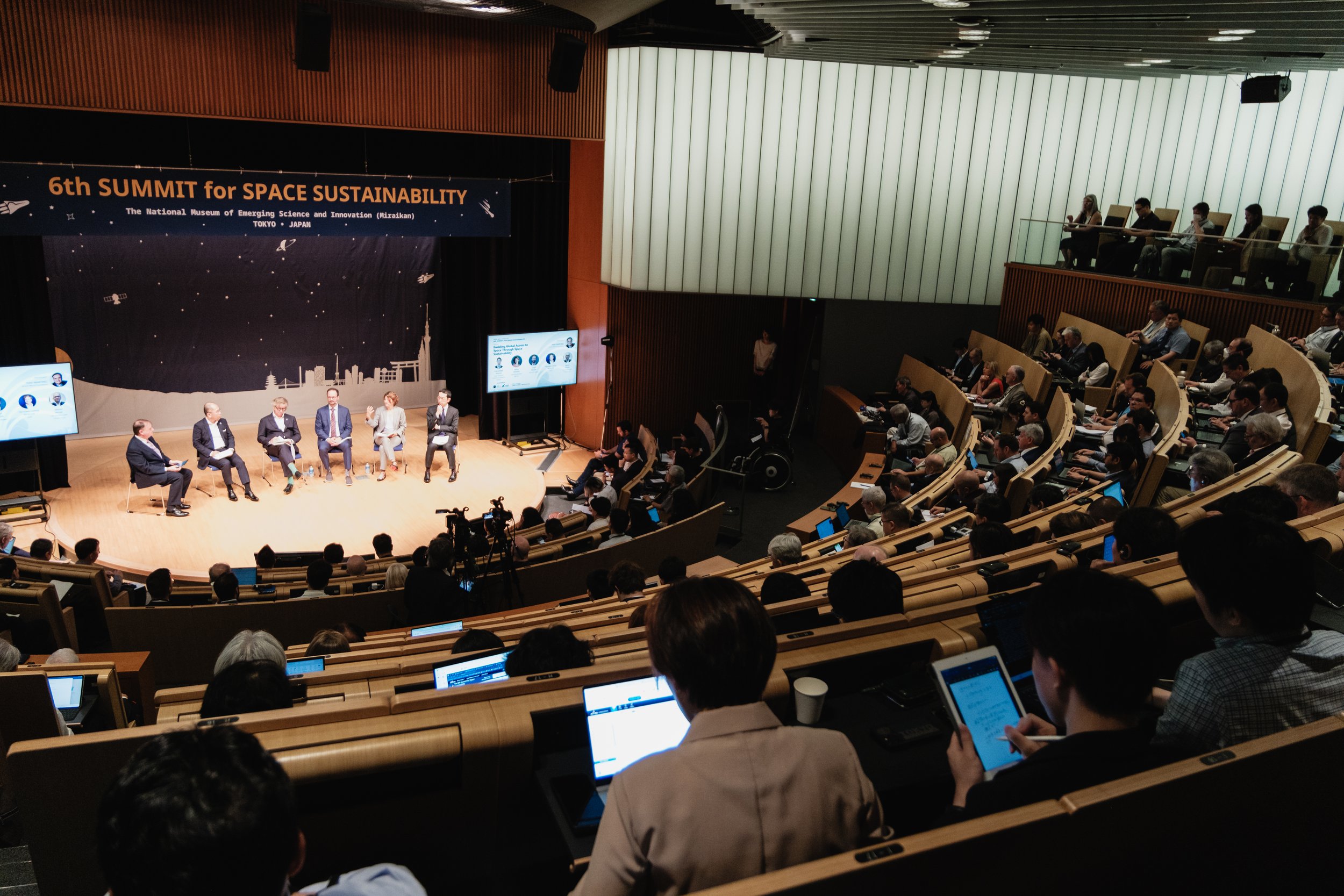
Enabling Global Access to Space Through Space Sustainability
- Yasuhito Fukushima, Senior Research Fellow, Policy Studies Department, Japan National Institute for Defense Studies
- Muriel Hooghe, Senior Manager - Space Safety, Luxembourg Space Agency
- Josef Koller, Principal, Space Safety and Sustainability, Amazon Kuiper
- Hermann Ludwig Moeller, Director, European Space Policy Institute
- Hiroaki Nagai, Group President of Space Engineering Group, Space Business Unit, SKY Perfect JSAT Corporation
Moderator: Peter Martinez, Executive Director, Secure World Foundation
Session details
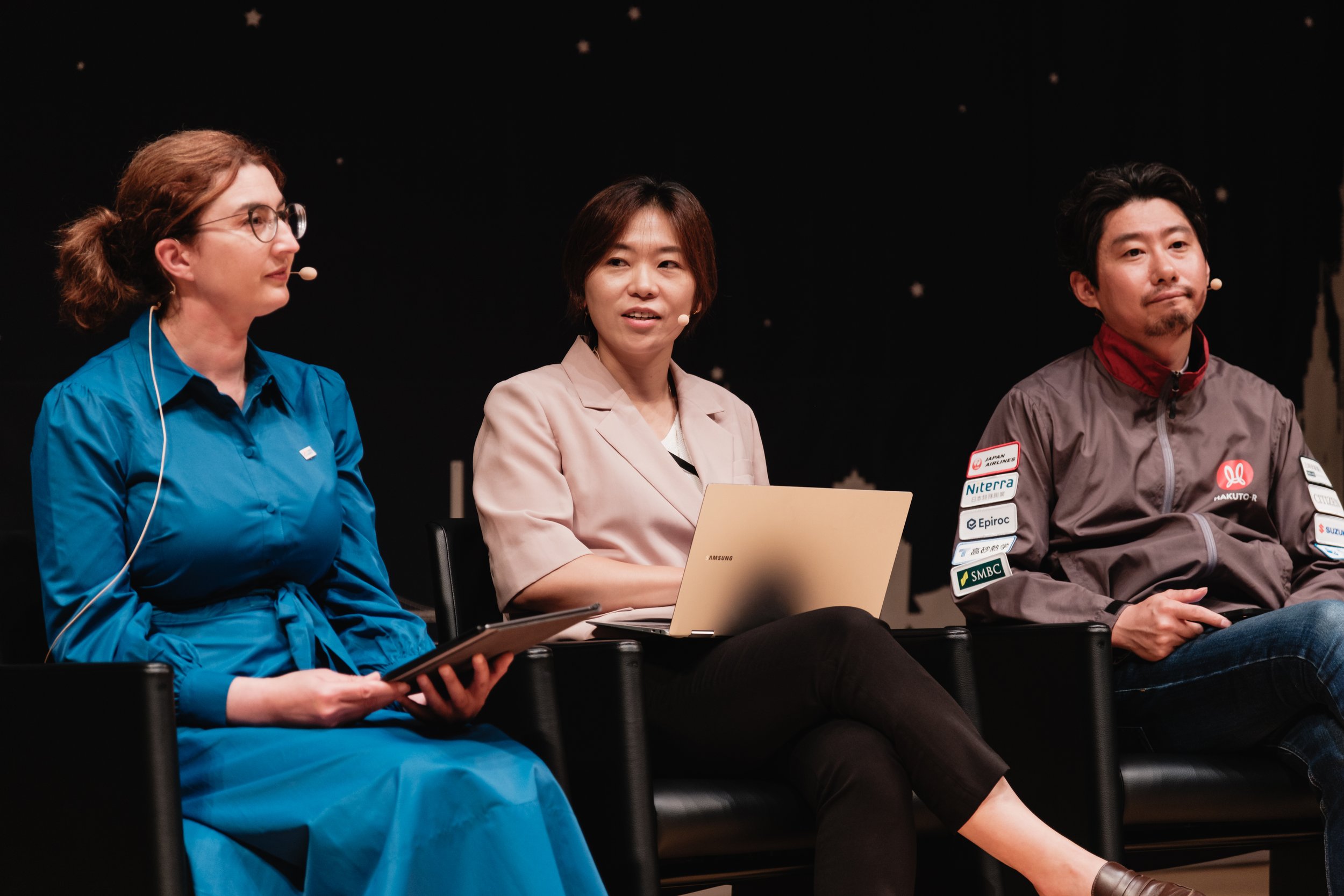
For global efforts on space sustainability to be fully meaningful and effective, they must be relevant at regional and national levels and consider the needs of a variety of actors. Newer and evolving space actors are seeking to responsibly access the benefits of space, in an environment where many of the space sustainability frameworks and goals have already been established. While global frameworks like the Sustainable Development Goals highlight the need for ensuring the benefits of space applications, and global agreements like the Guidelines for the Long-term Sustainability of Outer Space provide consensus baseline space sustainability principles, there is a need to focus on the implementation of policy and practices that will ensure space sustainability. With an emphasis on perspectives from the Asia-Pacific (APAC) region, this panel will explore how progress on space sustainability can help ensure global access to the benefits of space activities.
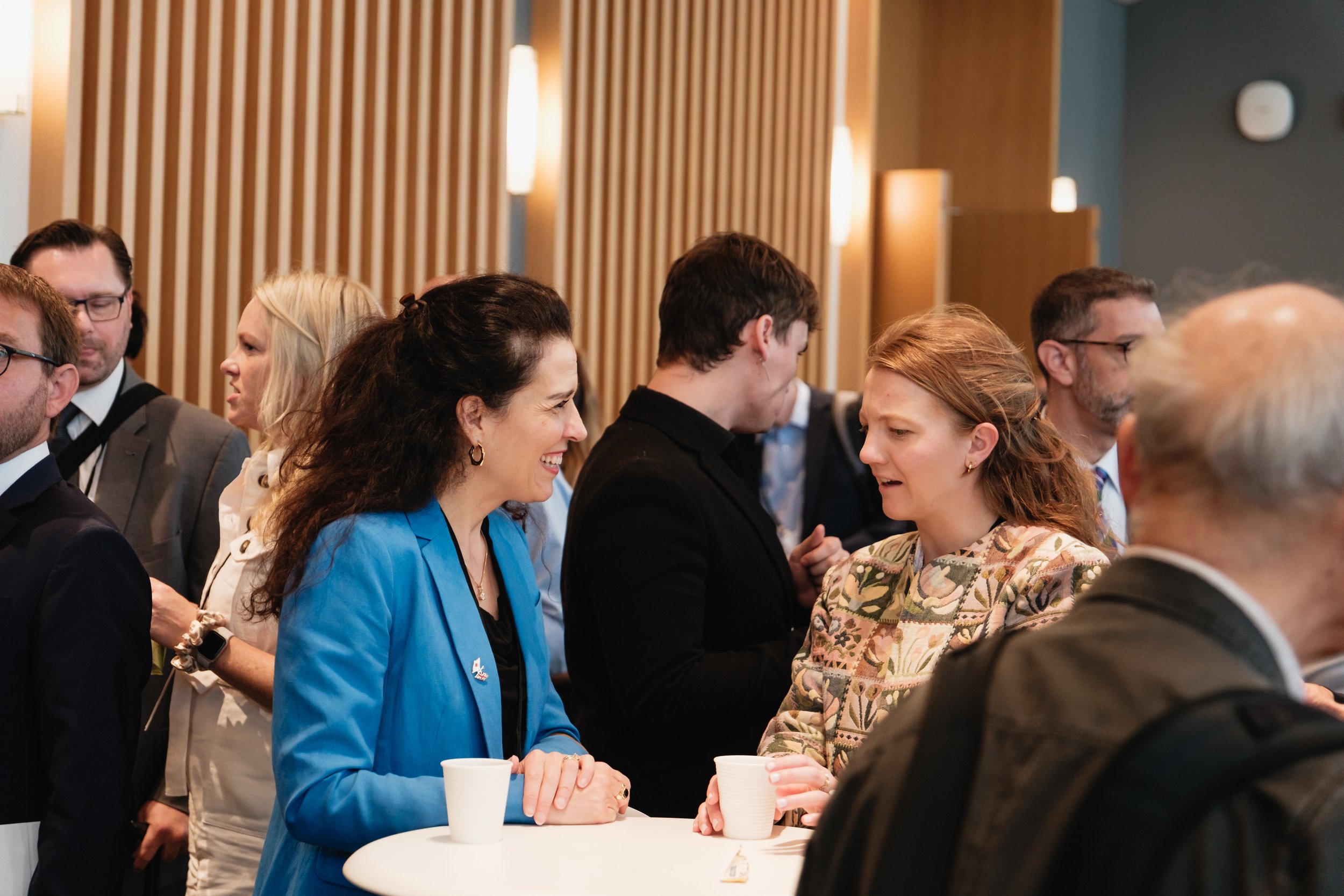
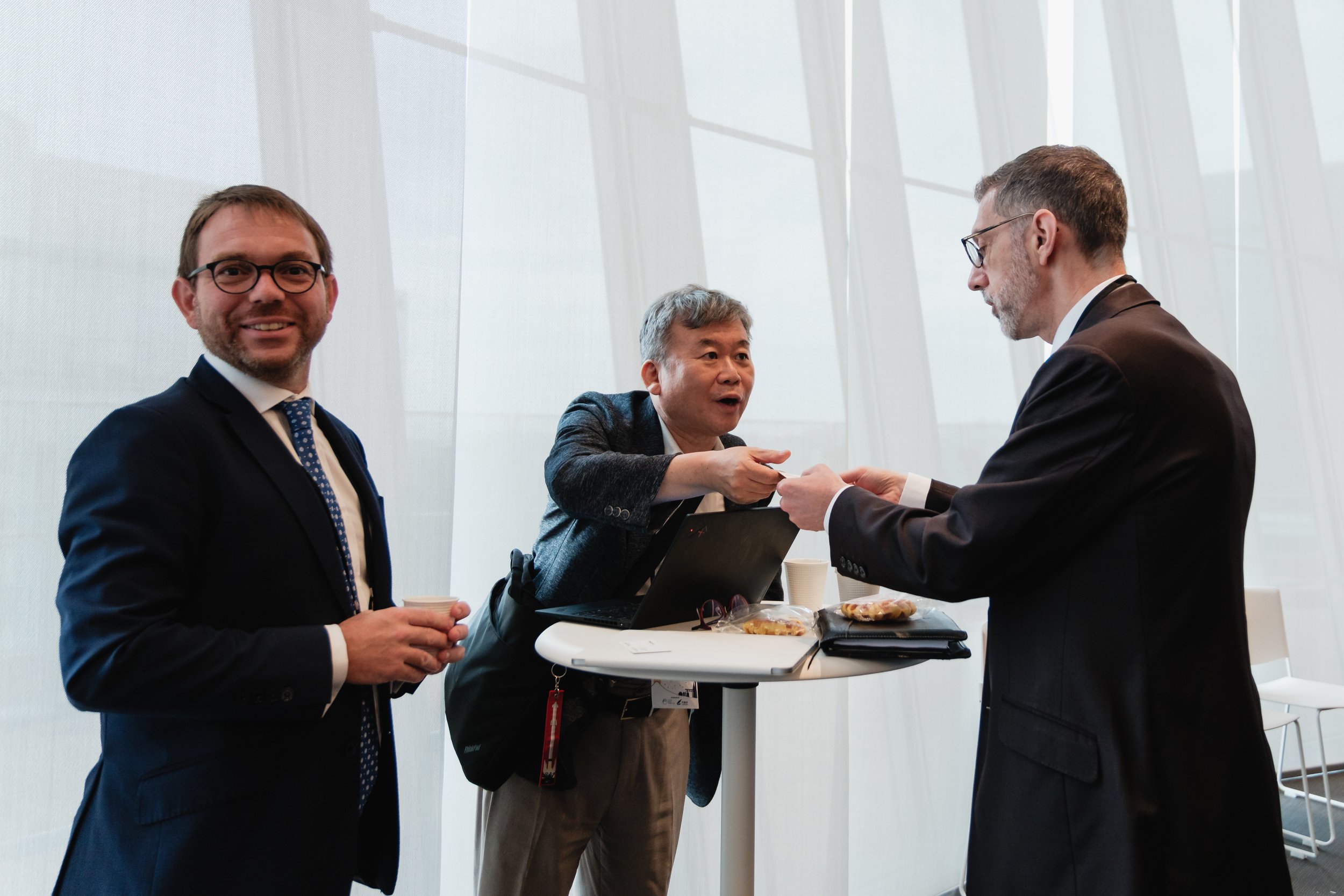
Networking Break
Session details
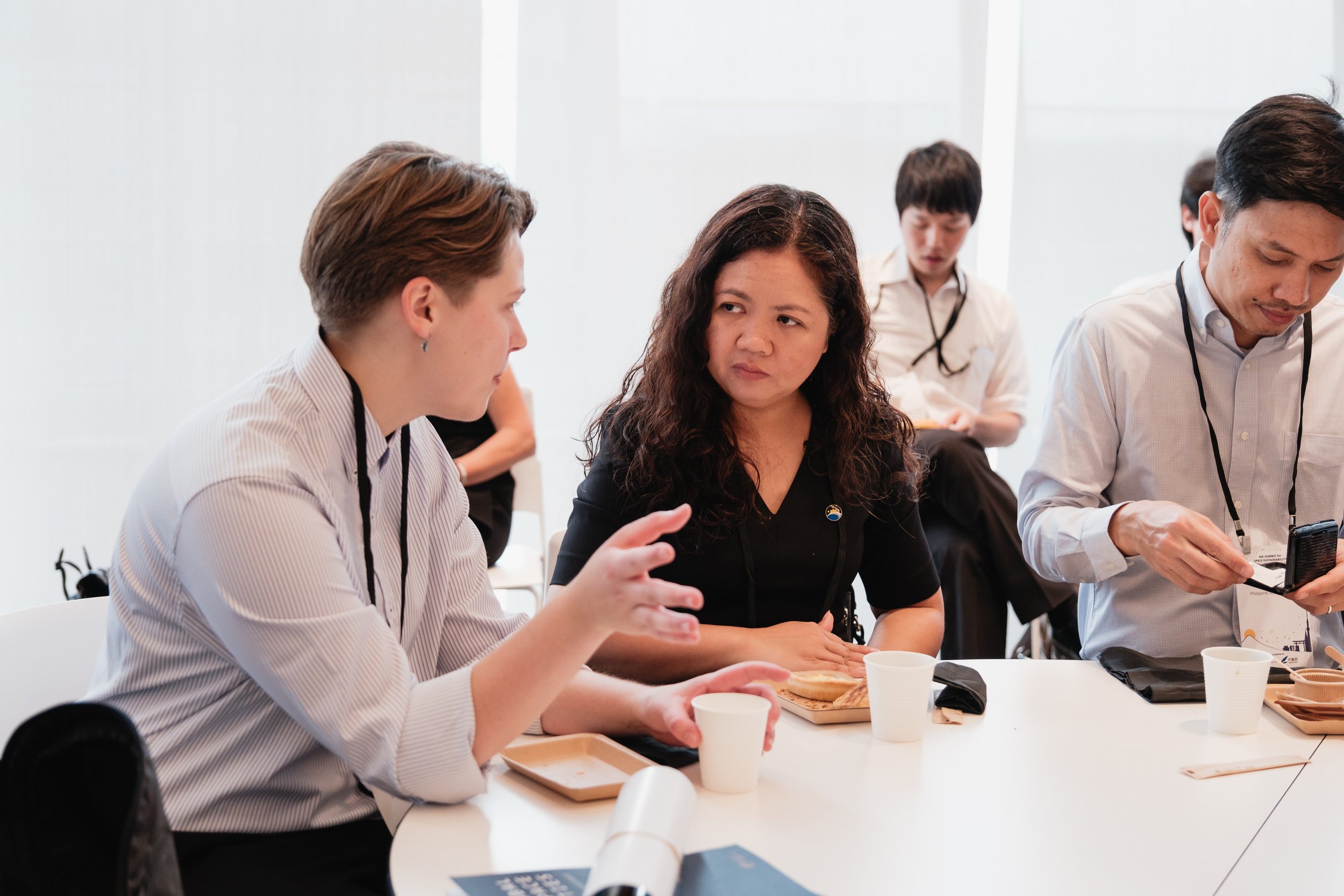
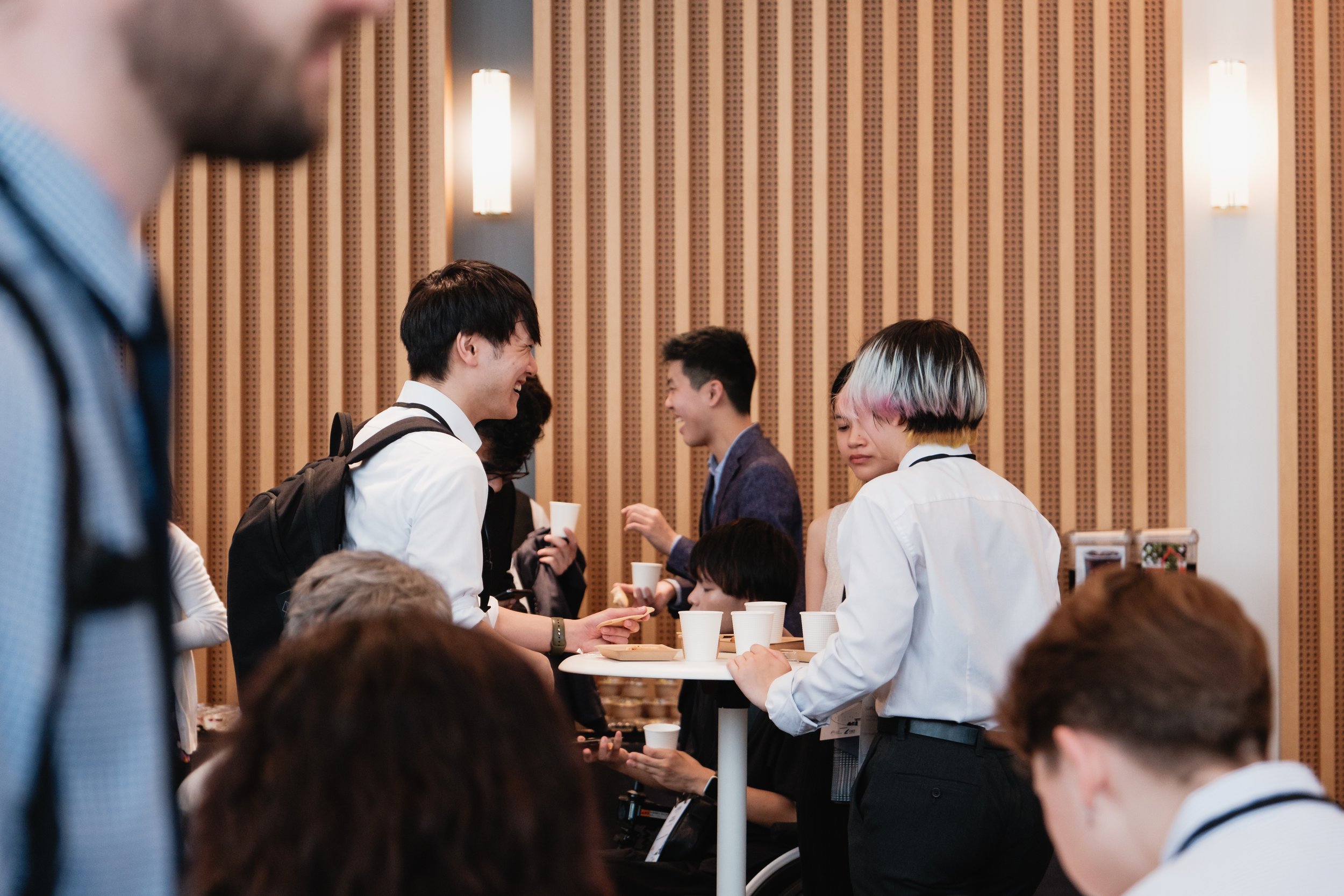
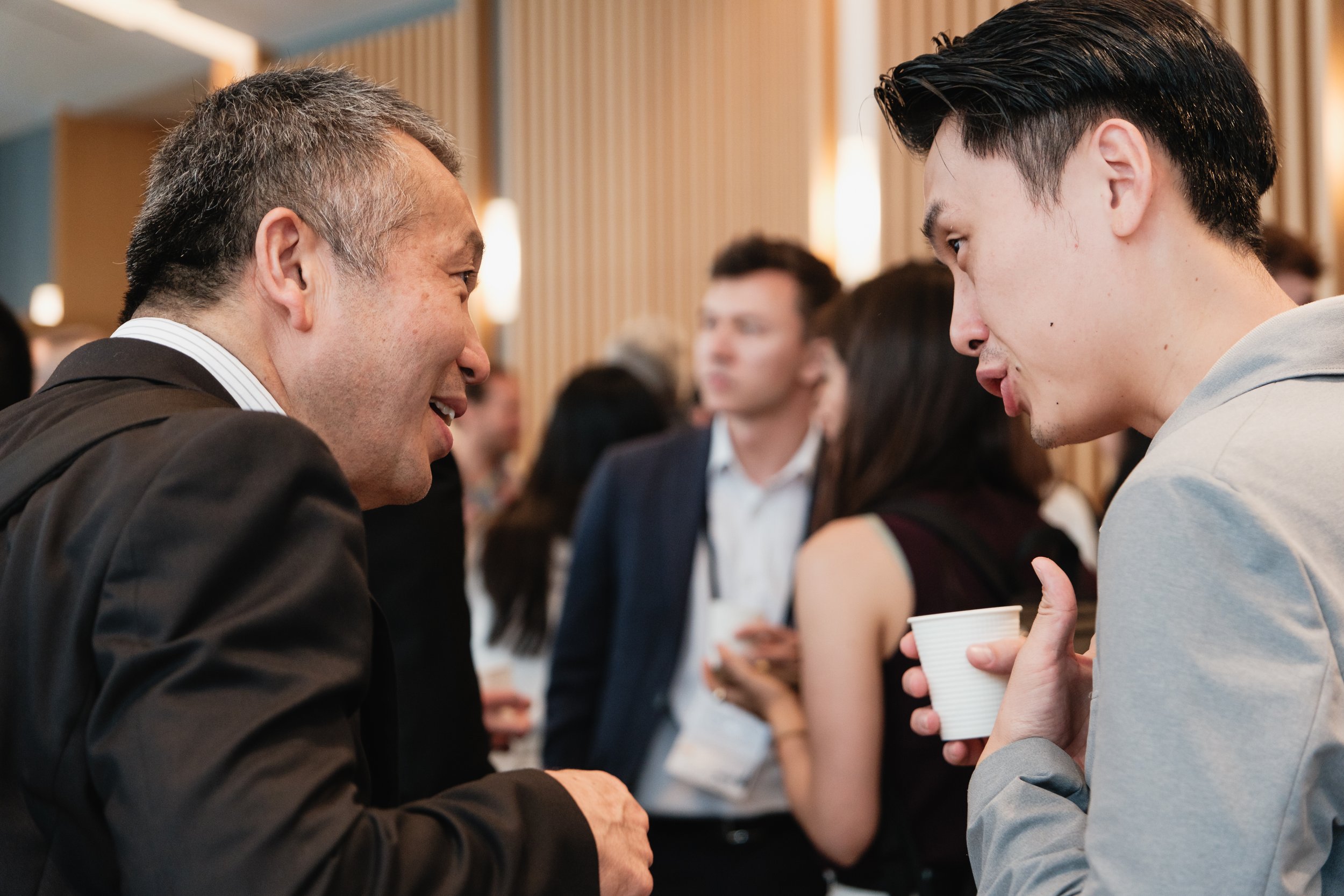
All in-person attendees are invited to network and enjoy some refreshments.
The ‘Our Fragile Space’ Exhibition is showing in the adjacent Conference Rooms: Venus and Mars. In-person attendees are welcome to visit at any time during the Summit. The photographer and project creator Max Alexander is here for both days and will be giving exhibition tours.
Fireside Chat Keynote
- Paul Bate, CEO, UK Space Agency
- Richard Dalbello, Director of the Office of Space Commerce, U.S. Office of Space Commerce
Moderator: Victoria Samson, Chief Director, Space Security and Stability, Secure World Foundation
Session details
This "Fireside Chat"-style keynote will highlight US Office of Space Commerce’s work on space situational awareness, including TraCSS and international collaboration, and the UK Space Agency’s approach to space situational awareness and international SSA collaboration efforts.
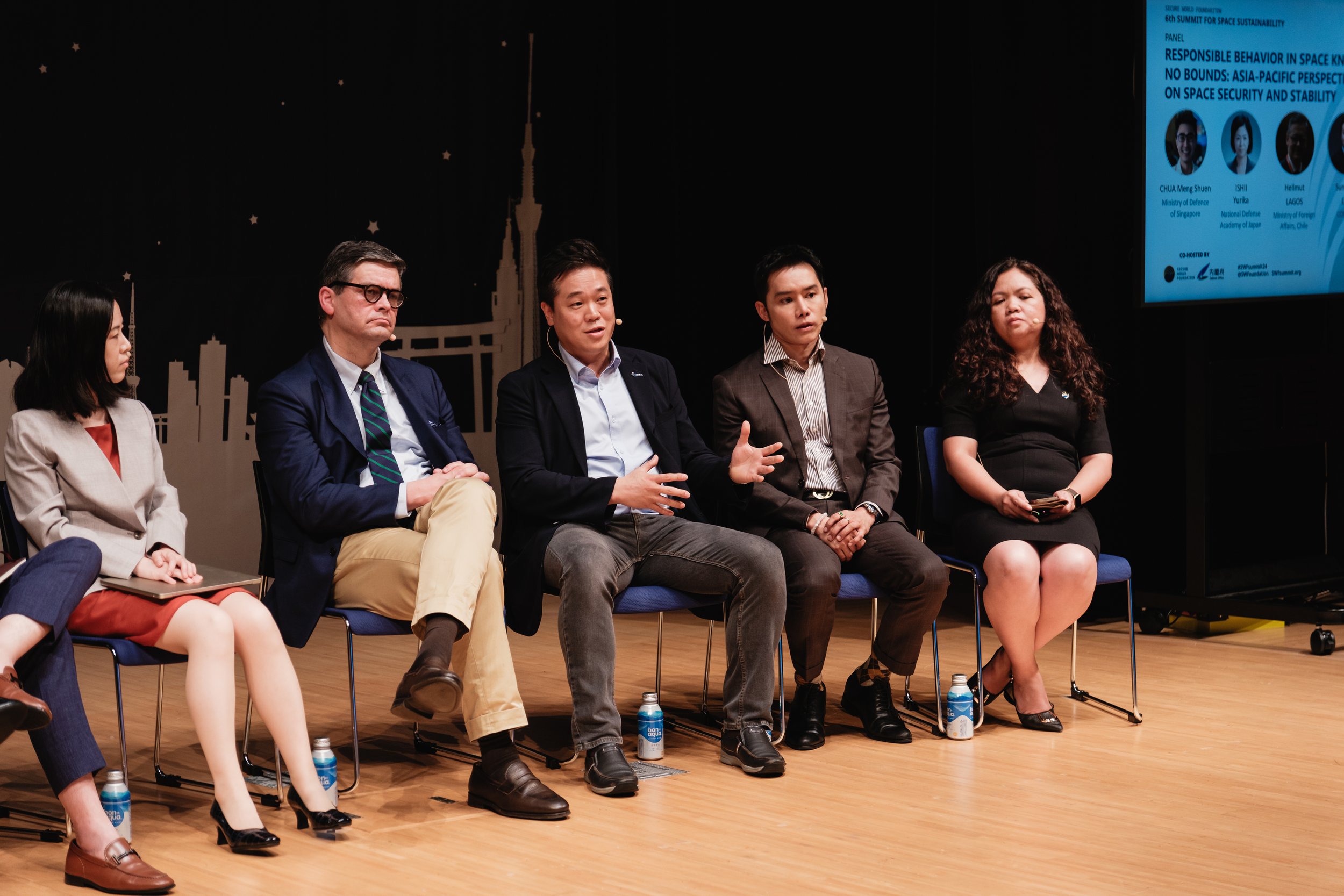
Responsible Behavior in Space Knows No Bounds: Asia-Pacific Perspectives on Space Security and Stability
- Meng Shuen Chua, MINDEF, Singapore
- Yurika Ishii, Associate Professor, National Defense Academy of Japan
- Hellmut Lagos, Head of Science, Energy, Education, Innovation and Astronomy Division, Ministry of Foreign Affairs of Chile, Former Chair of the Open-Ended Working Group on Reducing Space Threats
- Sunghee Lee, CEO, CONTEC
- Damrongrit Niammuad, Deputy Executive Director, GISTDA (Geo-Informatics and Space Technology Development Agency)
- Gay Jane P. Perez, Deputy Director General for Space Science and Technology, Philippine Space Agency (PhilSA)
Moderator: Kazuto Suzuki, University of Tokyo
Session details
The global discussion on space security and responsible behavior continues to press forward, despite facing long-standing divides on key issues. What viewpoints do Asia-Pacific countries have on behaviors and activities that might be perceived as being responsible, and are those perspectives being sufficiently reflected in international discussions on space security and stability? How do regional governments collect and incorporate the takes from their commercial entities and civil society? This panel will discuss these and other ways how we can contribute to global efforts to ensure that space is secure, stable, and predictable for all.
Networking Lunch
Session details
All in-person attendees are invited to network and enjoy an informal meal.
The ‘Our Fragile Space’ Exhibition is showing in the adjacent Conference Rooms: Venus and Mars. In-person attendees are welcome to visit at any time during the Summit. The photographer and project creator Max Alexander is here for both days and will be giving exhibition tours.
Keynote: Sustainability and Finance in the Space Sector
- Seiichiro Akita, Senior Managing Corporate Executive; Group Head, Japanese Corporate & Investment Banking Business Group, Mitsubishi UFJ Financial Group
Session details
Potential themes for this keynote include the nature of MUFG’s interest in the space sector, the connection between space activities and other interests in sustainability and finance, and the role the finance sector plays in helping collaboration between government and industry in sustainability.
Spotlight Talks: Emerging Issues and Technology Trends
- Hiroshi Koyama, Fellow, Mitsubishi Electric Corporation
- Rory Holmes, Managing Director, ClearSpace
- Haruna Iizuka, Head of Public Relations & Recruiting, Space BD Inc.
Session details
KOYAMA Hiroshi (Presentation in Japanese):
This spotlight session is intended to highlight MELCO's viewpoints on emerging issues and technology trends in space sustainability, especially as regards space situational awareness.
Rory HOLMES:
This spotlight session showcases industry perspectives on delivering active debris removal technology and missions for institutional customers. Additionally, it will focus on how governments can structure programs in ways that will actually lead to these services being viable and sustainable.
IIZUKA Haruna (Presentation in Japanese):
This spotlight session focuses on the importance of developing human capital resources, including STEM engagement, across the entire space value chain; and how such efforts help to enable the commercial space sector to provide increased societal benefit.
Hello Kitty Goes To Space: New Types of Space Exploration Partnership
- Julie Black, Missions and Capabilities Delivery Director for Discovery and Sustainability, UK Space Agency
- Soyoung Chung, Senior Researcher, Research Strategy Office, Korea Aerospace Research Institute (KARI)
- Takeshi Hakamada, CEO, ispace
- Koichi Wakata, Astronaut and Chief Technology Officer, Asia-Pacific Region, Axiom Space
- Koji Yamanaka, Director, JAXA Space Exploration Center, JAXA
Moderator: Ian Christensen, Summit Co-Chair & Senior Director, Private Sector Programs, Secure World Foundation
Session details
Space exploration is no longer the sole domain of a few established space-faring nations. Flagship lunar exploration initiatives are building cooperative programs that include new entrant countries. Commercial providers are offering opportunities for access to lunar missions. A growing set of countries are taking part in human spaceflight opportunities through both governmental and commercial programs, as well as planning and executing space exploration missions using increasingly capable small spacecraft. Yet questions remain about the benefits of investing in space exploration as a new actor and about how participation models can be developed in the context of flagship space exploration programs. This panel will discuss ways in which capabilities, interests, and contributions can be matched across the spectrum of actors involved in space exploration.
Networking Break
Session details
All in-person attendees are invited to network and enjoy some refreshments.
The ‘Our Fragile Space’ Exhibition is showing in the adjacent Conference Rooms: Venus and Mars. In-person attendees are welcome to visit at any time during the Summit. The photographer and project creator Max Alexander is here for both days and will be giving exhibition tours.
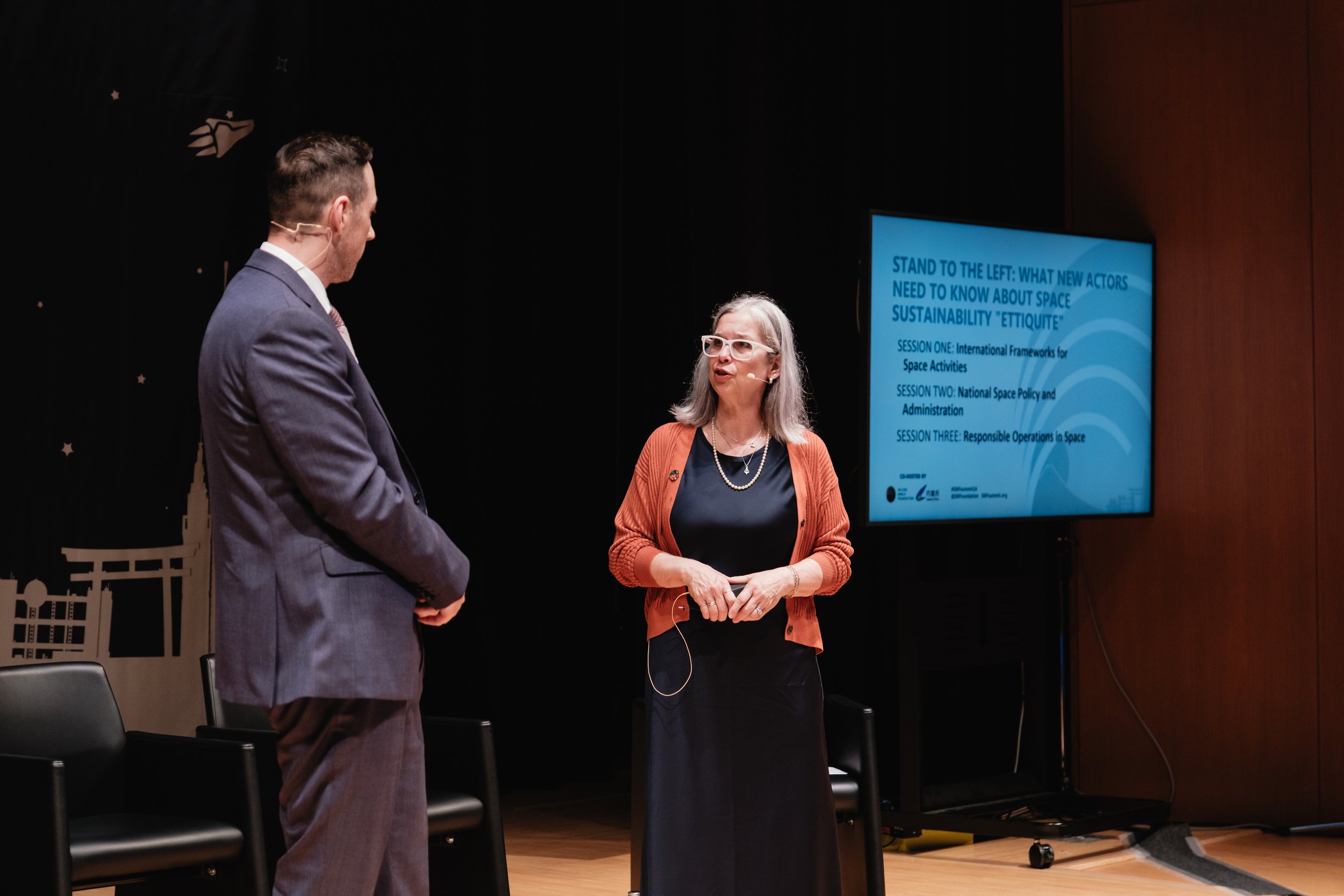
Stand to the Left: What New Actors Need to Know About Space Sustainability “Etiquette”
- Mhd Fairos Asillam, Space Regulator, Space Regulatory Division, Ministry of Science, Technology and Innovation (MOSTI), Malaysia
- Takashi Eishima, Co-Founder / Co-CTO, Axelspace Corporation
- Jeremy Hallett, Executive Chair, Space Industry Association of Australia
- Jonathan Hung, Executive Director, Office for Space Technology & Industry, Singapore (OSTIn), Office for Space Technology & Industry, Singapore (OSTIn)
- Koichi Kikuchi, Manager, International Relations Division, International Relations and Research Department, Japan Aerospace Exploration Agency (JAXA)
- Juli Lawless, Strategic Business Development Director, ExoAnalytic Solutions
- Mario Neri, Director, Spectrum Strategy & Innovation, Telesat
- Hazuki Mori, Lead, Space Technology, World Economic Forum
- Gabriel Swiney, U.S. Office of Space Commerce
Moderators: Ruth Pritchard-Kelly, Principal, RPK Advisors, LLC; Christopher Johnson, Senior Director of Legal Affairs and Space Law, Secure World Foundation
Session details
Throughout much of Japan, including here in Tokyo, it's important to follow the societal norm of standing to the left side of the escalator to allow others to pass. But in Osaka, you stand on the right. Similarly, in space, there are also written and unwritten rules that help ensure a stable, sustainable, usable space environment. This year, Secure World Foundation published an update to its Handbook for New Actors in Space to help new, emerging, or expanding space actors understand the complex environment and what it means to be responsible and sustainable. Participants in this highly interactive session will learn about commonly understood best practices across international law, national policy, and on-orbit operations.
International Frameworks For Space Activities
- Mhd Fairos Asillam, Space Regulator, Space Regulatory Division, Ministry of Science, Technology and Innovation (MOSTI), Malaysia
- Koichi Kikuchi, Manager, International Relations Division, International Relations and Research Department, Japan Aerospace Exploration Agency (JAXA)
- Mario Neri, Director, Spectrum Strategy & Innovation, Telesat
National Space Policy and Administration
- Jeremy Hallett, Executive Chair, Space Industry Association of Australia
- Jonathan Hung, Executive Director, Office for Space Technology & Industry, Singapore (OSTIn), Office for Space Technology & Industry, Singapore (OSTIn)
- Gabriel Swiney, U.S. Office of Space Commerce
Responsible Operation in Space
- Juli Lawless, Strategic Business Development Director, ExoAnalytic Solutions
- Takashi Eishima, Co-Founder / Co-CTO, Axelspace Corporation
- Hazuki Mori, Lead, Space Technology, World Economic Forum
Concurrent Roundtables (By Invitation Only)
Session details
These Roundtable Discussions will inform panel sessions on Day 2 of the Summit.
The first Roundtable will focus on the needs for space situational awareness-related capabilities, with an emphasis on enhancing APAC regional collaboration programs. The second Roundtable focuses on ongoing programs and discuss the necessary next steps to make forward progress on orbital debris remediation.
Concurrent Roundtable: Regional SSA Capabilities and Drivers (By Invitation Only)
Session details
In this invitation-only Roundtable, expert participants from governments and industry will present ongoing programs and discuss needs for space situational awareness-related capabilities, with an emphasis on enhancing APAC regional collaboration programs.
The discussion in this Roundtable will inform a panel session on Day 2 of the Summit.
Concurrent Roundtable: Next Steps on Debris Remediation (By Invitation Only)
Session details
In this invitation-only Roundtable, expert participants from governments and industry will present ongoing programs and discuss the necessary next steps to make forward progress on orbital debris remediation, including updates on projects and programs in the APAC region.
The discussion in this Roundtable will inform a panel session on Day 2 of the Summit.
Networking Reception
Reception keynote: Yasuo ISHII, Senior Vice President, Japan Aerospace Exploration Agency (JAXA)
Session details
All registered in-person participants are invited for an evening of lively conversations and networking while enjoying some hors d'oeuvres and drinks.
A reception keynote will be delivered by Mr. ISHII Yasuo (Vice President, Japan Aerospace Exploration Agency, JAXA).
Friday, July 12, 2024
Registration and Networking Breakfast
Session details
All in-person attendees are invited to check-in and enjoy a continental breakfast.
Young Professional Mentoring Breakfast
Session details
This networking event is exclusive to young professionals and students who are attending the conference.
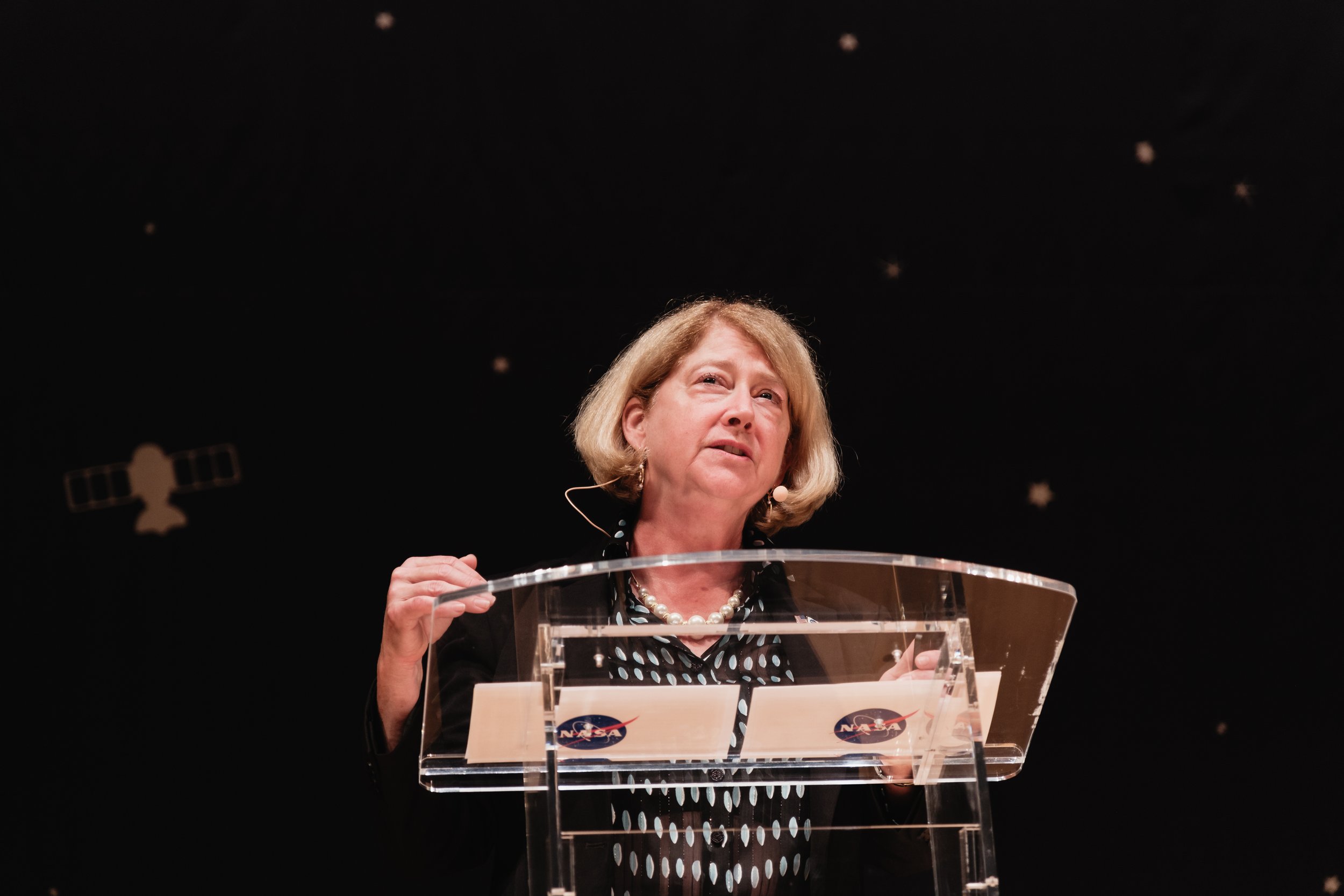
Keynote: NASA & Space Sustainability
- Pam Melroy, Deputy Administrator, NASA
The Shibuya Scramble Won’t Work in Space: Ideas for Enhancing APAC Space Situational Awareness
- Mariel Borowitz, Director of International SSA Engagement, US Office of Space Commerce, NOAA
- Sittiporn Channumsin, GISTDA
- A K Anil Kumar, Associate Director, ISTRAC (Indian Space Research Organisation Telemetry, Tracking and Command Network)
- Kimitoshi Sugiyama, Commander, Space Operations Group, Japan Air Self Defense Force
- Wahyudi Hasbi, Head of Research Center for Satellite Technology, National Research & Innovation Agency (BRIN), Indonesia
Moderator: Victoria Samson, Chief Director, Space Security and Stability, Secure World Foundation
Session details
Global space situational awareness (SSA) is critical to space safety and sustainability. Instead of a single global system, there is an emerging set of national and regional “hubs” that each provide information, analysis, and services to different groups of users. This session will discuss how countries and companies within the Asia-Pacific region are developing their own SSA capabilities to help avoid collisions and monitor threats in space. It will seek to explore possibilities for regional SSA cooperation. The session will also discuss how to develop data standards and structures to improve how the various SSA hubs around the world can better share information with their customers and between each other, building off of the roundtable held on Day 1 of the Summit for Space Sustainability.
Networking Break
Session details
All in-person attendees are invited to network and enjoy some refreshments.
The ‘Our Fragile Space’ Exhibition is showing in the Lobby area. In-person attendees are welcome to visit at any time during the Summit. The photographer and project creator Max Alexander is here for both days and will be giving exhibition tours.
Spotlight Talks: Emerging Issues and Technology Trends
- Hiroaki Miyoshi, Fellow, Aerospace domain, NEC Corporation
- Chiara Manfletti, CEO, Neuraspace
- Federico Di Vruno, Co-Director, IAU Centre for the Protection of the Dark and Quiet Sky / Square Kilometre Array Observatory (SKAO)
Session details
MIYOSHI Hiroaki (Presentation in Japanese):
This spotlight talk will focus on the intersection of commercial, security, and civil space. The overarching theme will center around multistakeholder engagement in space security, particularly interactions with the private sector.
Chiara MANFLETTI:
This spotlight session will present observations on the changing needs and challenges for space sustainability policy in light of new technical advancements in areas like space situational awareness, propulsion, and more.
Federico DI VRUNO:
The protection of the Dark and Quiet skies is undeniably embedded in the sustainable use of space, through reflection of sunlight and emission of radio frequencies the increasing number of resident space objects (RSO) in space and in particular LEO have the potential to fundamentally change the view of the night sky and significantly disrupt astronomical observations. As grim as this can sound, we are not at an inflection point yet, and both astronomy and industry are working hard to develop new technologies to mitigate these negative effects. This will discuss some of these solutions being developed by astronomical observatories and by the satellite industry.
Orbital Debris Remediation — Gotta Catch ‘Em All?
- Chuck Dickey, Principal at TCTB, LLC, TCTB, LLC
- Aya Iwamoto, Vice President, Policy and Government Relations, Astroscale Japan
- Ray Fielding, Head of Sustainability & Active Debris Removal, UK Space Agency
- Holger Krag, Head of Space Debris Office, European Space Agency
- Toru Yamamoto, Team Leader, Commercial Removal of Debris Demonstration (CRD2) project, JAXA
Introductory spotlight talk: Darren McKnight, Senior Technical Fellow, LeoLabs
Moderator: Ian Christensen, Summit Co-Chair & Senior Director, Private Sector Programs, Secure World Foundation
Session details
There is a scientific consensus that removing or remediating orbital debris is critical for space sustainability, but there are still debates over the best strategy for doing so. Should the focus be on removing the many small untracked objects that pose current threats to active satellites or the very massive objects that will drive long-term threats? Who pays to clean up space? This session will discuss the findings from the recent Orbital Debris Remediation Summit in New Zealand on what the priorities are and how to overcome the remaining legal, policy, economic, and diplomatic hurdles to make remediation a reality, as well as the roundtable held on Day 1 of the Summit for Space Sustainability.
Space Sustainability Rating Announcement
Watch recordingNetworking Lunch
Session details
All in-person attendees are invited to network and enjoy an informal meal.
The ‘Our Fragile Space’ Exhibition is showing in the nearby Conference Rooms: Venus and Mars. In-person attendees are welcome to visit at any time during the Summit. The photographer and project creator Max Alexander is here for both days and will be giving exhibition tours.
International Law and Clash of the Kaiju (In Space)
- Setsuko Aoki, Professor of Law, Keio University Law School
- Andrea Harrington, Institute of Air and Space Law Co-Director / Associate Professor, McGill University – Faculty of Law
- Mark Mozena, Vice President of Government Affairs, Planet
- Brian Weeden, Systems Director, Policy and Regulatory Team Lead, The Aerospace Corporation
- Melissa de Zwart, Professor Space Law and Governance, University of Adelaide
Introductory spotlight talk: Wen Zhou, ICRC
Moderator: Christopher Johnson, Senior Director of Legal Affairs and Space Law, Secure World Foundation
Session details
When kaiju battle on Earth, it usually leads to widespread destruction of the surrounding area. Many are concerned that a future space war between global powers will wreak similar devastation to everyone’s satellites and key orbital regimes as well as future commercial space activities. This session will discuss how existing laws of war apply to conflict in space, the positions States have taken on law of war in space, what the recent MILAMOS and Woomera manuals clarifying these questions have to add to the debate, and any gaps that need to be addressed to mitigate the harm and suffering resulting from a potential future space war.
Fireside Chat: Sustainability’s Role in Space Venture Capital Activities
- Hidetaka Aoki, Co-Founder&Director / Partner, Space Port Japan / Global Brain
- Estelle Godard, Investor, Promus Ventures
Moderator: Masayasu Ishida, Co-founder, President and CEO, SPACETIDE Foundation
Watch recordingNetworking Break
Session details
All in-person attendees are invited to network and enjoy some refreshments.
The ‘Our Fragile Space’ Exhibition is showing in the nearby Conference Rooms: Venus and Mars. In-person attendees are welcome to visit at any time during the Summit. The photographer and project creator Max Alexander is here for both days and will be giving exhibition tours.
Keynote: International Telecommunication Union & Space Sustainability
- Mario Maniewicz, ITU
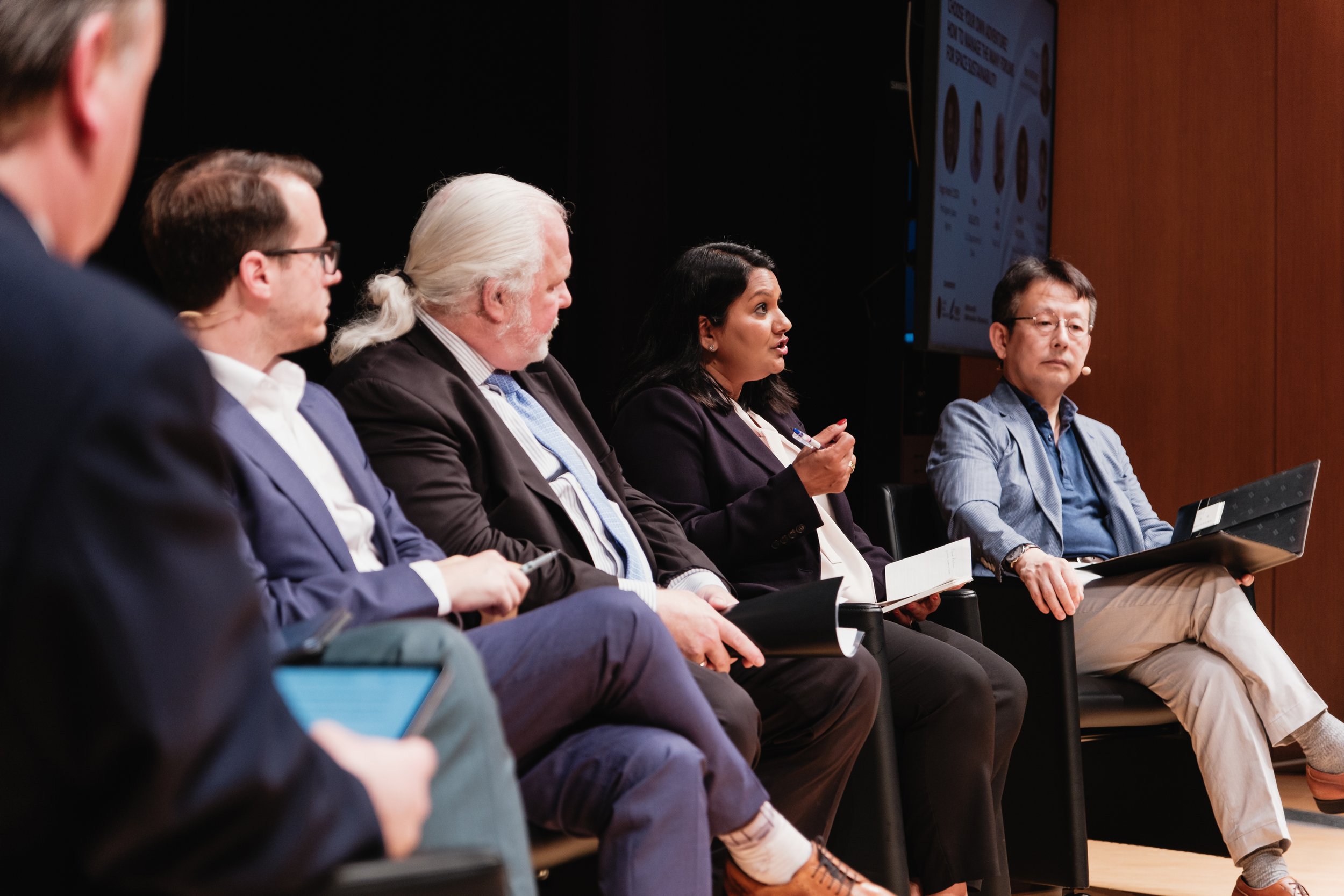
Choose Your Own Adventure? How To Manage the Many Forums for Space Sustainability
- Hugo Andre Costa, Executive Board Member, Portuguese Space Agency
- Ryan Guglietta, Lead Foreign Affairs Officer, U.S. Department of State
- John Janka, Chief Officer, Global Government Affairs & Regulatory, Viasat Inc.
- Angelie Moledina, Chief Impact Officer, Sustainable Markets Initiative
- Kimitake Nakamura, Deputy Assistant Minister (Ambassador), Ministry of Foreign Affairs
Opening remarks (virtual): Aarti Holla Maini, Director, United Nations Office for Outer Space Affairs (UNOOSA)
Moderator: Peter Martinez, Executive Director, Secure World Foundation
Session details
A sustainable future in space depends on effective institutions. To date, we have a plethora of these in a variety of locales: inside formal UN institutions and committees, in self-organized groups of States, in national policy and regulatory agencies, and as part of private sector standards and best practice initiatives. Given the awareness of the need to ensure space sustainability, this dizzying multitude of fora will only increase. How does the space community navigate and even optimize these separate fora in a holistic & responsive fashion for space sustainability? What opportunities do we have to improve how these various fora engage with each other to work towards a coherent goal?
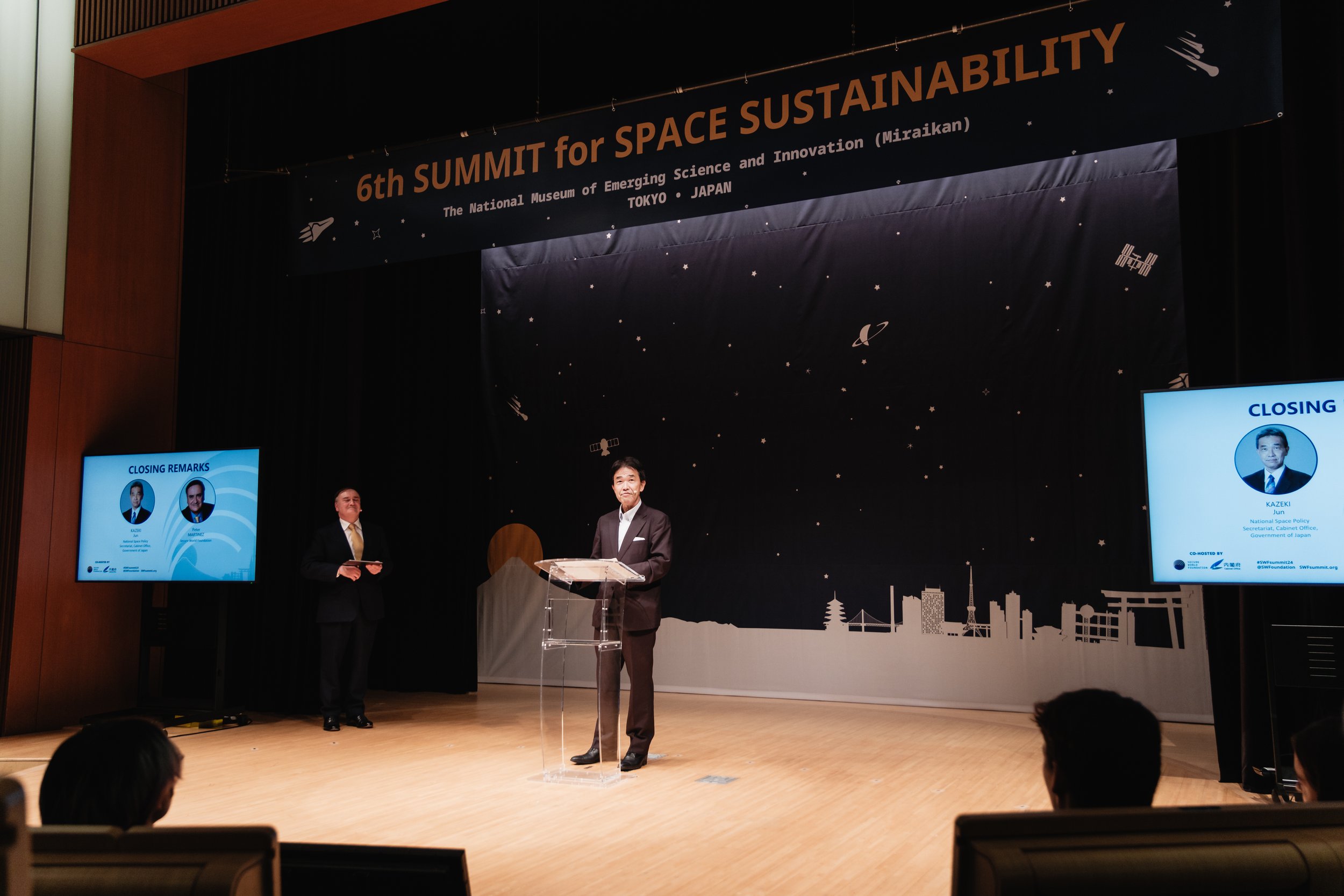
Concluding Remarks
- Jun Kazeki, Director General, National Space Policy Secretariat, Cabinet Office, Government of Japan
- Peter Martinez, Executive Director, Secure World Foundation
6th Summit for Space Sustainability Speakers
Seiichiro Akita
Senior Managing Corporate Executive; Group Head, Japanese Corporate & Investment Banking Business Group
Mitsubishi UFJ Financial Group
Read bio
SEIICHIRO AKITAEducation: Keio University, Tokyo, Japan,B. A. in Law (March, 1989)Arthur D. Little School of Management (July, 1997)Professional Career: Commercial BankMUFG Bank, Ltd., Tokyo, Japan*June 2023: Member of the Board of Directors, Deputy President; Chief Executive, Japanese Corporate & Investment Banking Business UnitMay 2023 to Present: Deputy President; Chief Executive, Japanese Corporate & Investment BankingBusiness UnitMay 2019 to May 2023: Managing Executive Officer; President and Chief Executive Officer, Bank of Ayudhya Public Company LimitedApril 2019 to May 2019: Managing Executive Officer; Head of Japanese Corporate Banking for the Americas*=The bank name of The Bank of Tokyo-Mitsubishi UFJ, Ltd. was changed to MUFG Bank, Ltd., on April 1, 2018.The Bank of Tokyo-Mitsubishi UFJ, Ltd., Tokyo, JapanJuly 2018 to March 2019: Executive Officer; Head of Japanese Corporate Banking for the AmericasMay 2017 to June 2018: Executive Officer and General Manager; Head of Asian Corporate Banking, MUFG Americas HoldingsJune 2015 to May 2017: Executive Officer and General Manager, Corporate Banking Division No.3,May 2015 to June 2015: General Manager, Corporate Banking Division No.3,November 2013 to May 2015: General Manager, Global CIB Planning OfficeThe Mitsubishi Bank, Ltd., Tokyo, Japan*April 1989: Joined The Mitsubishi Bank, Ltd., Shinbashi Branch, Tokyo*=One of the Predecessors of MUFG Bank, Ltd.Professional Career: Holding Company Mitsubishi UFJ Financial Group, Inc., Tokyo, JapanMay 2023: Senior Managing Corporate Executive (Representative Corporate Executive); Group Head, Japanese Corporate & Investment Banking Business GroupMarch 2015: ResignedNovember 2013 to March 2015: Co-Deputy General Manager, Corporate & Investment Banking Planning Division and, Co-Chief Manager, Corporate Planning Division, Strategic Alliance Office
Max Alexander
Photographer & Science Communicator
Max Alexander Photography
Read bio
Max Alexander is an international photographer and creative strategist with over 25 years of experience, specialising in science communication. His work includes capturing leading scientists, Nobel laureates, astronauts, and world leaders for space agencies and global institutions. Max has showcased his photography in high-profile exhibitions, such as at the Royal Albert Hall and London’s South Bank. His ground-breaking exhibition, ‘Our Fragile Space’, about space sustainability opened at Lloyd’s of London and has been exhibited at numerous prestigious locations. Max has a passion for making the universe accessible and engaging through photography, and he is a Fellow of the Royal Astronomical Society.
Hidetaka Aoki
Co-Founder&Director / Partner
Space Port Japan / Global Brain
Read bio
Hide Aoki has been working in Japan to promote the space business and create the private-sector-led space industry with his expertise in both the space business and space technology. After receiving a master's degree in aerospace engineering and a pilot's license in the U.S., he worked at Mitsubishi Electric, where he developed Japan's first spacecraft, Kounotori, and SLIM which is a Japan's first lunar lander and won a number of awards. He now oversees investment activities for space and other deep tech startups as a partner at Global Brain, one of the largest venture capital firms in Japan. He also co-founded SPACETIDE Foundation, Japan’s first industry-wide platform for accelerating NewSpace activities and co-founded and serves as a director of Space Port Japan to promote spaceport and space travel business. He also serves JAXA and government committees in his varied career.
Setsuko Aoki
Professor of Law
Keio University Law School
Read bio
Dr. Setsuko AOKI is Professor of Law at Keio University Law School, Japan since April 2016. She specializes in public international law especially space law and arms control. She obtained Doctor of Civil Law (D.C.L.) from McGill University, Montreal, Canada in June 1993. She has B.C.L. (1983) and LL.M. (1985) from Faculty of Law and Graduate School of Law, Keio University, Japan. She is the president of Japan Association of Disarmament Studies (since April 2023) and a director of the Japanese Society of International Law (since July 2022). She is also the Chair of the Experts Committee for the Economic Security Promotion Act and its Implementation Plans, Cabinet Secretariat of Japan (since November 2021).
Mhd Fairos Asillam
Space Regulator, Space Regulatory Division
Ministry of Science, Technology and Innovation (MOSTI), Malaysia
Read bio
Mhd Fairos bin Asillam was born in 1974 in Alor Setar, Kedah, Malaysia. He obtained a B.Sc. degree in Physics (Hons) from the University of Malaya, Malaysia, in 1998 and an MBA degree (Masters) from Universiti Kebangsaan Malaysia (UKM) in 2013. He is currently a Space Regulator in the Ministry of Science, Technology and Innovation, responsible for the regulation and implementation of the Malaysian Space Board Act 2022 (Act 834). This Act regulates certain Malaysian space activities for the purpose of safety, registration of space objects, and provides for certain space-related offenses and related matters. Previously, he was Senior Deputy Director at the National Planetarium, Kuala Lumpur, where he was responsible for planning and managing the space science education program. Previously, he was the Head of the Space Science Research Unit and Coordinator of the Langkawi National Observatory (LNO) at the National Space Agency of Malaysia (ANGKASA) for ten years. He is a member of the Institute of Physics Malaysia (IFM), associate member of the International Astronomical Union (IAU) and Committee on Space Research (COSPAR), co-chair of the IAU National Outreach Coordinator for national level representatives for the IAU Office for Astronomy Outreach (OAO), and national liaison for various space science programs. He was also the founder and first Editor-in-Chief of the Langkawi National Observatory Bulletin. He has experience in managing several national space research and development (R&D) programs, including managing the development of the Langkawi National Observatory, the National Space Weather, and the National Microgravity Program. He also led six space science R&D projects under ANGKASA special development funding, was principal investigator on two Ministry of Science, Technology and Innovation (MOSTI) research projects, and worked as a research member/collaborator on several High Impact Projects (HIR) and the Fundamental Research Grants Scheme (FRGS) of the Ministry of Higher Education (MOHE). He published several research papers in journals and conference proceedings on the above topics. He also has experience as a guest editor of Academy Science Malaysia Journal - Malaysia in Space, Secretary of the National Steering Committee and International Scientific Advisory Board for ASEAN Astronomy Workshop for Teachers (AAWT) until 2019, and consultant for the space documentary in Malaysia TV titled "Cinta Alam Cakerawala" aired on Malaysian TV in 2021. He is currently a consultant for a new RTM documentary titled "Meneroka Aeroangkasa" under the MOSTI Initiative for Scientific Exchange between Researchers and Industry (RISE).
Krystal Azelton
Summit Co-Chair & Senior Director, Program Planning
Secure World Foundation
Read bio
Krystal Azelton (née Wilson) is a Director of Space Applications Programs at Secure World Foundation and has over 15 years of international and domestic space, public policy, and management experience.Prior to joining SWF, Ms. Azelton was a consultant at Access Partnership, where she worked with international satellite service providers and other leading technology companies on policy issues related to spectrum management, emergency communications, telecommunications standards, orbital debris, and multilateral processes including representing industry at the Inter-American Telecommunication Commission. She has also served as a project manager at the Tauri Group, a leading aerospace analytics firm, providing research, analysis, strategic planning, and regulatory assessment to government and commercial clients. She led and supported production of NASA’s strategic plans, audits, performance plans, budgets, and annual reports. Her work exposed to the full range of NASA’s Earth observation, human exploration, and aviation programs. In that role, she was also recognized as a key member of a data management team that received the NASA Group Achievement Award.Previously, Ms. Azelton was in the field of international development as a Monitoring and Evaluation Manager at Development Alternatives, Inc in Afghanistan working on US military and local government initiatives and as Senior Program Assistant at the National Democratic Institute in Africa and Washington, DC working on sustainable governance projects. In those roles, she worked closely with the United Nations, the World Bank, the Department of State, the Department of Defense, US and international nonprofits, and others.
Paul Bate
CEO
UK Space Agency
Read bio
Paul Bate has been CEO of the UK Space Agency since September 2021. He leads a team of more than 300 who provide the R&D funding to use space to increase prosperity across the world, protect the planet, and to understand the universe. Prior to space, Paul ran global sales at Babylon Health, which floated on the New York Stock Exchange in 2021, and built a consultancy business. Paul was David Cameron’s senior health adviser in Downing Street and led on health targets and finances in Tony Blair’s Delivery Unit. Paul holds a PhD in Particle Physics.
Julie Black
Missions and Capabilities Delivery Director for Discovery and Sustainability
UK Space Agency
Read bio
Julie is UK Space Agency’s Director of Missions and Capability for Discovery and Sustainability, working with international partners to deliver capabilities to track objects in orbit, reduce or remove debris, and lead global regulation and best practice to make space activities more sustainable. Julie also leads the Space Science and Space Exploration programmes, leading the UK’s participation in a rolling pipeline of competitively selected science and exploration missions. Julie began her career in automotive engineering on whole vehicle Lotus Cars programmes and delivering R&D and innovation projects for Lotus Engineering Consultancy across Europe, Asia and the US. Moving into the public sector, Julie has specialised in government major project delivery across education, central banking, energy regulation and law enforcement sectors.
Mariel Borowitz
Director of International SSA Engagement
US Office of Space Commerce, NOAA
Read bio
Mariel Borowitz is the director of International Space Situational Awareness (SSA) Engagement in the Office of Space Commerce. In this role, she focuses on the development and implementation of an approach to international coordination on space situational awareness and space traffic coordination. She also works directly with the team developing the Traffic Coordination System for Space (TraCSS), which will provide space safety services to civil and commercial users around the world. Dr. Borowitz joins the office as part of a two-year detail under the Intergovernmental Personnel Act (IPA) program.Dr. Borowitz is also an Associate Professor in the Sam Nunn School of International Affairs at the Georgia Institute of Technology and head of the Nunn School Program on International Affairs, Science, and Technology. Her research deals with international space policy issues, focusing particularly on global developments related to remote sensing satellites and challenges to space security and sustainability.Her book, “Open Space: The Global Effort for Open Access to Environmental Satellite Data," published by MIT Press, examines trends in the development of data sharing policies governing Earth observing satellites, as well as interactions with the growing commercial remote sensing sector. Her work has been published in Science, Strategic Studies Quarterly, Space Policy, Astropolitics, and New Space. Her research has been supported by grants from the National Science Foundation, the National Aeronautics and Space Administration, and the Department of Defense.Dr. Borowitz earned a PhD in Public Policy at the University of Maryland and a Masters degree in International Science and Technology Policy from the George Washington University. She has a Bachelor of Science degree in Aerospace Engineering from the Massachusetts Institute of Technology.
Sittiporn Channumsin
GISTDA
Read bio
Mr. Sittiporn Channumsin's path in aerospace engineering is characterized by academic excellence and a steadfast commitment to advancing space technology for Thailand. Holding a degree in electronics engineering from King Mongkut's Institute of Technology Ladkrabang (KMITL) in Thailand, he pursued advanced studies at the University of Surrey and the University of Glasgow in the United Kingdom, specializing in aerospace engineering. Upon returning to Thailand, he played a key role in Geo-informatic of Space Technology development agency known as GISTDA, eventually assuming leadership positions as the Director of the Space Technology Research Center and Assistant Director of the Space Technology Development Office. With a focus on space safety and security technology, he advocates for responsible space resource utilization and fosters international partnerships. Through his expertise and leadership, Mr. Channumsin continues to drive Thailand's progress in space policy and technology.
Ian Christensen
Summit Co-Chair & Senior Director, Private Sector Programs
Secure World Foundation
Read bio
Ian Christensen is Director of Private Sector Programs at Secure World Foundation (SWF). He is responsible for leading SWF’s engagement activities with the commercial space industry, where his activities focus on policy and governance topics in support of the development of private sector space capabilities: including topics such as space debris mitigation, norms of behavior for responsible space operations, and space resources policy. Mr. Christensen was a member of the Hague International Space Resources Governance Working Group, where he chaired the Group’s Socioeconomic Panel. He also served as a member of the Secretariat for the Consortium for Execution of Rendezvous and Servicing Operations (CONFERS), an industry group developing best practices and standards for commercial satellite servicing. Mr. Christensen also is currently a member of the Global Expert Group on Sustainable Lunar Activities (GEGSLA) Prior to joining SWF, Mr. Christensen worked at leading space-sector consulting firms Futron Corporation and Avascent. In these positions he managed or served in lead analysis roles on market, business planning, and forecasting studies for numerous governmental and commercial space sector clients in the United States, Asia, Europe and Oceania. He also currently serves as a Fellow of the Institute of Space Commerce.Prior to Futron, Mr. Christensen was a research assistant at the Space Policy Institute at George Washington University, a Policy Fellow at the National Academies of Science Committee on Science, Engineering and Public Policy, and a research assistant at the University of Nebraska Public Policy Center.Mr. Christensen holds a Master of Arts (M.A.) in international science and technology policy, focusing on space policy from the George Washington University Elliott School for International Affairs. He holds dual Bachelor’s of Science (B.S.) degrees in political science and biochemistry from the University of Nebraska-Lincoln. He also completed the International Space University (ISU) 2007 Space Studies Program in Beijing, China.
Meng Shuen Chua
MINDEF, Singapore
Read bio
Meng Shuen is the Deputy Director of International Security and Emerging Technologies at the Defence Policy Office, Ministry of Defence, Singapore. His work encompasses the technology and international policy nexus, and he leads the Ministry of Defence’s efforts to develop policies and strategies relating to emerging technologies and domains, including outer space, cyberspace and artificial intelligence. As part of his work, Meng Shuen has represented Singapore as part of the national delegation to the UN working groups on space security and cybersecurity. He was previously a technology planner in the Future Systems and Technology Directorate, Ministry of Defence. He began his career as a research scientist in DSO National Laboratories. He received his bachelor’s degree in physics and history & philosophy of science from the California Institute of Technology, USA.
Soyoung Chung
Senior Researcher, Research Strategy Office
Korea Aerospace Research Institute (KARI)
Read bio
Ms. Soyoung Chung is a senior researcher at the Korea Aerospace Research Institute (KARI). She has been working on space policy and strategy at KARI for about 15 years. During this time, she has participated in the Korean government's space policy formulation and numerous government-commissioned policy studies. She has also been seconded as an expert to the government office in charge of space affairs. She is currently working at the Strategy and Planning Directorate, where she is working on research and technology strategy. She is also a member of KARI's International Cooperation Committee.Ms. Chung's recent work has focused on space exploration and she coordinates KARI's strategic planning for space exploration. In addition, she is currently responsible for supporting KASA's work on multilateral dialogues on space exploration. As part of this assignment, she manages projects related to Korea's participation in the International Space Exploration Coordination Group (ISECG), the Artemis Accords Signatories Working Group, and the Space Resources Working Group under the United Nations Committee on Peaceful Uses of Outer Space (UNCOPUOS). She also leads the Korean government's project to support UNOOSA's Space4Women initiative.Ms. Chung holds a master's degree in space engineering and has completed a doctoral program in science and technology policy. Prior to joining KARI, she was a visiting scholar and research assistant at the Space Policy Institute of the George Washington University (GWU), and interned at the United Nations Office for Outer Space Affairs (UNOOSA) and the United Nations Economic and Social Commission for Asia and the Pacific (UNESCAP). She was an active member of the Space Generation Advisory Council (SGAC). Ms. Chung has studied and worked in Asia, Europe and the United States and is fluent in Korean, English and Japanese.
Hugo Andre Costa
Executive Board Member
Portuguese Space Agency
Read bio
Hugo André CostaExecutive Board Member, Portuguese Space AgencyHugo André Costa is the Executive Board Member of the Portuguese Space Agency and the Portuguese representative at the Committee of Outer Space Affairs at UNOOSA, the ESA Council and International Relations Committee (being currently the Chair of the committee), and the European Commission. During his time at the Portuguese Space Agency, Mr. Costa successfully chaired the council working group in preparation for the Space Council in 2021, leading the working group of the space component of the Portuguese Presidency of the EU Council, achieving the conference manifesto "The Lisbon Manifesto on EO for Africa and Europe".Before joining the agency, he worked at EUMETSAT in the Copernicus Programme Office. He also had experience in the space industry, both in Space and Ground Segments in Spain and Germany.Hugo André Costa was born and raised in the north of Portugal and has a bachelor's in physics from Minho University. His love for space took him to Strasbourg to study a Master in Space Studies at the International Space University and later an MBA at the Frankfurt School of Finance and Management. Currently he is a PhD Student in International Relations at University of Lisbon.
Richard Dalbello
Director of the Office of Space Commerce
U.S. Office of Space Commerce
Read bio
Richard DalBello is currently the Director of the Office of Space Commerce, National Oceanic and Atmospheric Administration, U.S. Department of Commerce. In this role he is responsible for managing the Department’s efforts to establish a space traffic coordination system to ensure safe space operations for commercial and international civil space ventures. In addition, Richard is responsible for the regulation of the US commercial remote sensing industry and for general advocacy, across the government, for commercial space industry interests.Prior to joining the Department of Commerce, Richard was Virgin Galactic’s Vice President of Global Engagement. In this role, Richard was responsible for international business development for the company’s unique fleet of carrier aircraft and space vehicles. Prior to joining Virgin, Richard served as Director, Space and Aeronautics, in the White House Office of Science and Technology Policy. In this role, he served as the principal advisor on space and aeronautics matters to the Science Advisor to the President. In this position, Richard played a key role in the development and implementation of the Administration’s domestic and international space policy and program priorities.Prior to joining OSTP, Richard served as the Vice President of Government Affairs for Intelsat General. He served previously as president of the Satellite Broadcasting and Communications Association, and for more than three years as the president of the Satellite Industry Association.Richard earned a bachelor’s degree in political science from the University of Illinois, a master’s degree in law from McGill University, and a doctorate in jurisprudence from the University of San Francisco.
Melissa de Zwart
Professor Space Law and Governance
University of Adelaide
Federico Di Vruno
Co-Director
IAU Centre for the Protection of the Dark and Quiet Sky / Square Kilometre Array Observatory (SKAO)
Read bio
Federico Di Vruno is one of the Co-Directors of the IAU Centre for the Protection of the Dark and Quiet Sky from Satellite Constellation Interference (IAU CPS) and Spectrum Manager at the SKA Observatory. Federico's main interest is on Radio Astronomy, in particular the protection of the radio spectrum to enable the most sensitive radio astronomical observations. Before his involvement in Radio Astronomy, he worked in the space industry as an electronic engineer specialised in electromagnetic compatibility and radio frequency interference in communication and scientific spacecraft. He has been involved in technical compatibility studies and regulatory discussions around Low Earth Orbit satellite constellations and radio astronomy since 2019. In addition to his role in the IAU CPS, he represents the SKAO at the ITU Radiocommunication Sector as well as at the United Nations Committee on the Peaceful Uses of Outer Space (UN COPUOS).
Chuck Dickey
Principal at TCTB, LLC
TCTB, LLC
Read bio
TCTB was created by Chuck Dickey in 2019 as a Texas Limited Liability Company (LLC). TCTB’s Russian partner, Valentin Uvarov has established a Russian companion entity to TCTB, Research Center for Space Economy and Policy, an autonomous non-commercial organization (ANO SEP).TCTB’s Chinese partner, Guoyu Wang, has created Beijing HarmonizeSpace Consult Co., Ltd., a Chinese consulting company for space-related matters, as TCTB’s companion entity in China. Chuck was previously Deputy General Counsel for Lockheed Martin Space. TCTB was recognized in 2023 as a Permanent Observer to the United Nations Committee on the Peaceful Uses of Outer Space (UNCOPUOS). TCTB’s novel multi-jurisdictional NGO business model can act as a bridge between cooperating governments, as well as between world-wide industry and paying governments, to enable cooperative remediation of Massive Derelicts before the next collision!
Takashi Eishima
Co-Founder / Co-CTO
Axelspace Corporation
Read bio
He was involved in developing the world's first CubeSat at the University of Tokyo Graduate School. After completing his doctoral degree at Tokyo University without obtaining the degree in 2006, he worked as a project researcher at the University of Tokyo. He joined Axelspace in 2008 as a co-founder and has been formulating technology development roadmaps and engineer talent development plans as Senior Fellow and Senior Engineering Unit Leader in the Engineering Department. He has consistently led the company in technical aspects, including technology development and satellite project management. As of June 2023, he holds the position of Co-CTO, responsible for spacecraft technologies, concurrently serving as Head of AxelLiner Business Division from February 2024.
Ray Fielding
Head of Sustainability & Active Debris Removal
UK Space Agency
Read bio
Ray Fielding, a materials engineer by training, has spent over 20 years delivering and leading cutting edge technology projects in the defence research and space sectors. Previous roles have included programme leader for sustainable operations for the UK Ministry of Defence, and head of the UK Space Agency’s sustainable development initiative, the International Partnership Programme. Ray is now Head of Sustainability & Active Debris Removal (ADR) at the UK Space Agency, a varied role ranging from developing sustainability standards to leading delivery of a national ADR mission.
Yasuhito Fukushima
Senior Research Fellow, Policy Studies Department
Japan National Institute for Defense Studies
Read bio
Dr. Yasuhito Fukushima is a senior research fellow at the National Institute for Defense Studies (NIDS) in Tokyo. He is also a guest associate professor at the Faculty of Policy Management, Keio University, and lectures on space security. Before joining NIDS in 2009, he was a research fellow at the Center for the Promotion of Disarmament and Non-Proliferation at the Japan Institute of International Affairs. He is a former visiting scholar at the University of California Institute on Global Conflict and Cooperation and, prior to that, a visiting scholar at the George Washington University Space Policy Institute. Dr. Fukushima studied policy management and holds a Ph.D. from Keio University.
Estelle Godard
Investor
Promus Ventures
Read bio
Estelle Godard is an investor at Promus Ventures, focusing on Spacetech and Deeptech. She holds a Master’s degree in Economics and Public Policy from Sciences Po Paris. Estelle serves on the boards of space companies and the European Center for Space Economy and Commerce, driving innovation in the space economy. Previously she led investments and ventures efforts at the European Space Agency.
Ryan Guglietta
Lead Foreign Affairs Officer
U.S. Department of State
Read bio
Ryan Guglietta is a Lead Foreign Affairs Officer in the U.S. Department of States' Office of Space Affairs where he leads on issues concerning outer space sustainability, space situational awareness (SSA), space traffic coordination (STC), and multilateral engagement in the United Nations Committee on the Peaceful Uses of Outer Space (UNCOPUOS). Prior to joining the office in 2019, Ryan worked in the Office of the Director at the National Institute of Health as a policy analyst. Ryan received his PhD from the University of California, Los Angeles in 2016 and his Bachelor of Science degree from McGill University in 2011.
Takeshi Hakamada
CEO
ispace
Read bio
ispace, inc. Founder & CEOTakeshi HakamadaInspired by Star Wars as a child, Takeshi Hakamada set out to pursue a life focused onspace exploration. He went on to earn a Master’s degree in Aerospace Engineeringfrom Georgia Tech, where he was involved in the conceptual design of next-generationaerospace systems. Starting in 2010, while working for a management consulting firm,he worked part-time to lead the Japanese team, HAKUTO, one of the finalists for theGoogle Lunar XPRIZE competition, and changed the team’s management to ispace, inc.As Founder & CEO of ispace, Takeshi has raised record fundraising for the companyand is now leading a multinational commercial lunar exploration program, known asHAKUTO-R. An active proponent for the commercial space industry, Takeshi is guidingispace to continuously challenge itself to enable humans to establish a sustainableecosystem between the Earth and the Moon by unlocking the utilization of spaceresources.株式会社 ispace 代表取締役 CEO & Founder袴田 武史 (ハカマダ タケシ)子供の頃に観たスターウォーズに魅了され、宇宙開発を志す。ジョージア工科大学で修士号(航空宇宙工学)を取得。大学院時代は次世代航空宇宙システムの概念設計に携わる。外資系経営コンサルティングファーム勤務を経て 2010 年より史上初の民間月面探査レース「Google Lunar XPRIZE」に参加する日本チーム「HAKUTO」を率いた。同時に、運営母体の組織を株式会社 ispace に変更する。現在は史上初の民間月面探査プログラム「HAKUTO-R」を主導しながら月面輸送を主とした民間宇宙ビジネスを推進中。宇宙資源を利用可能にすることで、人類が宇宙に生活圏を築き、地球と月の間に持続可能なエコシステムの構築を目指し挑戦を続けている。
Jeremy Hallett
Executive Chair
Space Industry Association of Australia
Read bio
Jeremy is an experienced business leader and investor within the Space and Defence Industry in Australia and Internationally. Jeremy is currently Executive Chairman at the Space Industry Association of Australia, the peak industry body for the Australian Space Industry. At SIAA he is also Chair of the IAC2025 Local Organising Committee and Chair of the Performance and Remuneration Committee.Jeremy is also CEO at Brindabella & Company, a merchant bank mobilising private capital for the advancement of Australia's sovereign capability, he sits on the Advisory Board at DroneShield, an ASX-listed company leading the world in technology for the detection and defeat of autonomous systems, and is an Investor and Mentor at Moonshot Space - Australia's first (and only) Space-focused startup accelerator. Jeremy also provides expert advice to other Australian organisations covering Government, Academia and Industry related to national security, strategy, technology and investment.Previously, Jeremy was CEO & Managing Director at Clearbox Systems, one of Australia's longest standing and most successful Defence and Space businesses. Clearbox Systems provided solutions across Satellite Communications, Space Domain Awareness, Electronic Warfare, Cyber & Cryptography, and Broadcast and Telco. Clearbox's solutions have been deployed extensively in Australia and Internationally and are renowned for their technology, dependability of delivery and responsiveness to emerging requirements.While leading Clearbox Systems, Jeremy helped found Quasar Satellite Technologies, a CSIRO spin-out company, alongside venture capital and industry founders. Quasar is enabling a new future for space communications by commercialising world-beating phased array technology from CSIRO.Jeremy is passionate about Australia's Space and Defence Industry and believes in the ability of Australian Industry to provide world-leading technology and services. He is an enthusiastic advocate for Australian Industry and has deep technical, commercial and operational knowledge in key sectors where Australian Industry has a competitive advantage.
Andrea Harrington
Institute of Air and Space Law Co-Director / Associate Professor
McGill University – Faculty of Law
Read bio
Prof. Andrea Harrington currently serves as the Co-Director of the Institute of Air and Space Law and Associate Professor at the McGill Faculty of Law. She is also an Adjunct Professor in the Space Resources Program for the Colorado School of Mines. Prof. Harrington previously served as Dean of Space Education and Full Professor at Air University for the United States Space Force (USSF), where she was responsible for overseeing the West Space Seminar and Schriever Space Scholars, as well as leading Guardian Education development efforts for USSF Space Delta 13. In that role, she led the establishment of ground-breaking USSF academic programs in Washington DC through Johns Hopkins University School of Advanced International Studies. She is a licensed attorney in Massachusetts. She served as Associate Director of the University of Mississippi Air and Space Law programs and Associate Chair for the Policy, Economics, and Law Department in the International Space University’s Space Studies Program. She holds a DCL and LLM from McGill, a JD from the University of Connecticut, an MSc in European Politics and Governance from the London School of Economics, and a BA from Boston University.
Wahyudi Hasbi
Head of Research Center for Satellite Technology
National Research & Innovation Agency (BRIN), Indonesia
Read bio
Dr.-Ing. Wahyudi Hasbi is a distinguished scientist and engineer renowned for his significant contributions to aerospace and satellite technology. He began his academic journey with a Bachelor's degree in Physics from Hasanuddin University in Makassar, Indonesia, in 2000. In 2011, he furthered his education with a Master of Science in Computer Science from IPB University in Bogor, Indonesia.Dr. Hasbi's academic achievements culminated in earning a Doctoral degree with the highest honors, Summa Cum Laude, in Engineering, specializing in satellite systems, from the Institut für Luft- und Raumfahrt at Technische Universität Berlin, Germany.Professional Career:Currently, Dr. Hasbi serves as the Head of the Research Center for Satellite Technology at the Research Organization for Aeronautics & Space, (formerly known as LAPAN), under the National Research & Innovation Agency of the Republic of Indonesia (BRIN).Early Contributions and Key Projects:Dr. Hasbi's career began with a pivotal role as an engineer in the development of the LAPAN-TUBSAT satellite from 2003 to 2004, Indonesia's first microsatellite launched in 2007, in collaboration with Technische Universität Berlin. He further demonstrated his expertise as a System Engineer and Chief Engineer in the development of the LAPAN-A2/LAPAN-ORARI (2010-2013) and LAPAN-A3/IPB (2013-2016) satellites developed in Indonesia, both of which are successfully operational in orbit.Professional Affiliations and Recognitions:Dr. Hasbi's professional excellence is acknowledged through certifications as an Executive Professional Engineer (IPU) and an ASEAN Engineer. He is a Senior Member of the IEEE in Aerospace & Electronics Systems & Computer Society and the American Institute of Aeronautics and Astronautics (AIAA). Additionally, he is a member of the Japan Geoscience Union (JGU) and an academician in The International Academy of Astronautics (IAA). He is also a valued member of the National Higher Education Council at the Ministry of Education, Culture, Research, and Technology of the Republic of Indonesia.Leadership and Service:Dr. Hasbi has held various leadership roles, including IEEE Indonesia Section Chair (2021-2022), Vice-Chair (2017-2019), and Vice-Chair for the Indonesia Section Joint Chapter of IEEE Aerospace & Electronics Systems and IEEE Geoscience & Remote Sensing Society since 2013. He also chairs the Indonesian Satellite Society and currently serves as Chairman of the International Amateur Radio Union (IARU) Region-3 Asia Pacific (2021-2024).International Policy and Cooperation:Dr. Hasbi significantly influences international policy and cooperation as the Chair of Working Party-3 Science Issues for the Asia Pacific Telecommunity (APT) Preparatory Group for the ITU World Radio Conference 2023 (WRC-23) and was recently re-elected to chair the Working Party Science Issues for APT preparation for WRC-27, that will cover several important agenda items; lunar communications allocations, protecting radio astronomy from aggregate radio-frequency interference caused by non-geostationary-satellite orbit systems, regulations for space weather, safeguarding passive satellite services and allocations for Earth exploration-satellite service. He is also actively involved in meetings with the United Nations Office for Outer Space Affairs (UNOOSA) and regional meetings such as the Asia-Pacific Regional Space Agency Forum (APRSAF).Awards and Honors:In recognition of his outstanding contributions, Dr. Hasbi has received numerous awards and honors. Notably, he was honored with the Outstanding Performance Employee award by the Chairman of LAPAN in 2015 and received an Outstanding Award for the LAPAN-A2 satellite development team from the Ministry of Research & Technology of the Republic of Indonesia in 2013. In 2016, he was bestowed with the prestigious Satyalancana Wirakarya ("Role Model Medal") by the President of the Republic of Indonesia for his exceptional dedication to satellite design and development. Furthermore, in 2023, he was awarded as an Innovation Hero by Indonesia Forum & Corporate Innovation Asia (CIAS), as well as received the IEEE Region-10 Asia Pacific Outstanding Volunteer Award 2023 for his remarkable contribution within IEEE.Research and Academic Contributions:Dr. Hasbi's research interests include small satellites, satellite systems, ground stations, frequency and satellite regulatory issues, space impact, and sustainability. He actively participates in small satellite workshops across Indonesian universities and has over 50 publications in journals, conference proceedings, and books, contributing significantly to the academic community.
Aarti Holla Maini
Director
United Nations Office for Outer Space Affairs (UNOOSA)
Read bio
Aarti Holla-Maini is the Director of the UN Office for Outer Space Affairs (UNOOSA), having taken up post on September 18 following her appointment by United Nations Secretary-General António Guterres.Ms. Holla-Maini brings over 25 years of experience in the space and satellite sector, working predominantly with international organizations and regulators. Prior to the United Nations, she held the post of Secretary-General of the Global Satellite Operators Association.Ms. Holla-Maini is a recognized leader with a strong track record in forging public-private and cross-sector partnerships; high-level advocacy at the international level; strategic communication and managing diverse stakeholders. Under her leadership, Ms. Holla-Maini expanded the association from being a regional organization to a global one representing commercial satellite operators around the world.She was one of the chief architects of the Crisis Connectivity Charter established in 2015 for emergency telecommunications via satellite with the UN World Food Programme’s Emergency Telecommunications Cluster and has, on multiple occasions, secured recognition and policy support for space technologies to play their rightful role in connecting the unconnected, in Europe, Africa and beyond.The appointment of Ms. Holla-Maini comes at a time when activities in space are being increasingly driven by the private sector. Her deep experience in high-level advocacy with international organizations and regulators, along with her understanding of the opportunities and challenges facing the space sector, will serve Member States well as they seek to access and leverage the benefits of space to accelerate sustainable development.Ms. Holla-Maini’s experience has included service as a member of the World Economic Forum's Global Future Council on Space; member of the Advisory Group of the Space Sustainability Rating managed by eSpace at EPFL Space Center; member of the Advisory Board of the Satellite Industry Association of India; Senior Space Policy Advisor to Forum Europe and an Expert Advisor on Space Traffic Management for European Union studies 2021-2023.Ms. Holla-Maini holds a bachelor’s degree in law with German law from Kings College London and a master’s degree in business administration from HEC in France. She is fluent in French, German and Punjabi alongside her native English and has moderate knowledge of Dutch.
Rory Holmes
Managing Director
ClearSpace
Read bio
15+ years of experience in the Space industry, working both at manufactures and operators, delivering programs for both commercial and institutional customers (ESA, UKSA, CNES).Rory has a Master of Physics from Oxford University, a PhD from the University of Heidelberg and the Project Management Professional (PMP) accreditation.
Muriel Hooghe
Senior Manager - Space Safety
Luxembourg Space Agency
Read bio
Muriel Hooghe currently works at the Luxembourg Space Agency where she leads Space Safety activities. Muriel represent Luxembourg at European Space Agency and European Union boards on Space Safety matters and is involved in the development of the Space Ecosystem in Luxembourg.Prior to this, she worked at SES, where she had roles in Spectrum Management, Contingency and Transition Planning, and Flight Dynamics.Muriel holds an Engineering Degree from the Free University of Brussels and a PhD in Physics from the University of Nice-Sophia Antipolis. She also teaches Space Project Management at the University of Luxembourg since 2019.
Jonathan Hung
Executive Director, Office for Space Technology & Industry, Singapore (OSTIn)
Office for Space Technology & Industry, Singapore (OSTIn)
Read bio
Mr. Hung is the Executive Director at the Office for Space Technology & Industry (OSTIn), Singapore’s national space office.OSTIn’s mission is to lead and inspire Singapore in space, to safeguard and progress Singapore’s interests. OSTIn shapes space policies and international partnerships, grows a globally competitive space ecosystem and talent pool, and supports research and development of space capabilities that serve national imperatives.Mr. Hung was formerly the Executive Chairman of Singapore Space and Technology Limited (SSTL), Asia Pacific’s leading organisation focused on developing the space technology industry.His international work experience includes senior management roles with CAE Inc., Rheinmetall, ST Engineering and Flex, where he was credited for establishing and leading their successful Advanced Innovation Centre.Earlier in his career, Mr. Hung was in government service as Centre Director for Middle East & North Africa Operations at the Singapore Economic Development Board (EDB). Whilst at HQ EDB, he handled portfolios in aerospace, marine/offshore and super yacht sectors.Mr. Hung currently serves on the Board of the World Robot Olympiad Association, chairs the Asia Pacific Sub-Committee at the International Astronautical Federation, and is an Honorary Board Member at the Space Generation Advisory Council.Jonathan graduated Magna Cum Laude from Embry-Riddle Aeronautical University, double majoring in Aerospace Science and Aviation Business Administration.
Haruna Iizuka
Head of Public Relations & Recruiting
Space BD Inc.
Read bio
Haruna graduated from Sophia University in 2012 with a major in Science and Technology. During her studies, she focused on neuronal migration. Following graduation, Haruna leveraged her research background at Recruit Co., Ltd. by assisting clients in developing effective hiring strategies and providing recruitment process support. In 2016, she was selected to join the organizing committee for the Tokyo 2020 Olympic and Paralympic Games. There, she played a key role in organizational development and volunteer management. Upon her return to Recruit, Haruna transitioned to a government relations role, where she facilitated communication between the company and various government ministries and agencies.
Masayasu Ishida
Co-founder, President and CEO
SPACETIDE Foundation
Read bio
As co-founder, president and CEO of SPACETIDE oundation, Masayasu works on a variety of cross-industry activities with the aim of creating new waves in the space industry. Masayasu is also leading the global space group of A.T. Kearney where he has provided management consulting services to governmental agencies and space related companies in various countries. On top of that, Masayasu has been contributing to policymaking in the Japanese government through various governmental committees. He holds a degree in Mechanical Engineering from the University of Tokyo.
Yasuo ISHII
Senior Vice President
Japan Aerospace Exploration Agency (JAXA)
Read bio
As of April 1, 2024, Mr. ISHII Yasuo serves as JAXA Senior Vice President in charge of Strategic Planning and Management (focusing on Space Strategy Fund), Business Development and Industrial Relations, Chief Engineer Office, and Safety and Mission Assurance.As for his previous position, Mr. Ishii has resided as the JAXA Vice President from 2020 to 2024. And during his professional career at the agency, he has taken numerous leadership roles including Director of Research Strategy Department, Director of Management and Integration Department at the Institute of Space and Astronautical Science (ISAS), and Director of Bonn Office in Germany.He hold Bachelor’s Degree and Master’s Degree in aerospace engineering from the University of Tokyo in 1984 and 1986, respectively.
Yurika Ishii
Associate Professor
National Defense Academy of Japan
Read bio
Yurika Ishii is an Associate Professor at the National Defense Academy of Japan. Her areas of interest include general public international law, space law and security laws in global domains. She is the Japanese government expert for, the United Nations, Group of Governmental Experts on further effective measures for the prevention of an arms race in outer space from 2023 to 2024. She is a member of Ministry of Education, Culture, Sports, Science and Technology, Subcommittee on International Space Station and International Space Exploration, Space Exploration and Utilisation Subcommittee and Cabinet Office, Space Policy Committee, Sub Group on Space Security.She achieved LL.B. from the University of Tokyo, Faculty of Law (Political Science Course), LL.M. from Cornell Law School (with Rotary Ambassador Scholarship), and Ph.D from the University of Tokyo, Graduate Schools for Laws and Politics with a thesis on international regulation of economic crimes, which was published as International Regulation of Transnational Crimes (Yuhikaku, 2017; Japanese; Awarded the 51st Adachi Mineichiro Award). Her latest work includes Japanese Maritime Security and Law of the Sea (Brill, 2022; Awarded the 39th Ohira Masayoshi Memorial Award).
Aya Iwamoto
Vice President, Policy and Government Relations
Astroscale Japan
Read bio
Aya Iwamoto, Vice President, Policy and Government Relations, Astroscale Japan, is responsible for Astroscale’s policy efforts in Japan towards spaceflight safety to achieve long-term space sustainability through On-Orbit Servicing. She has experience as a Japanese diplomat engaging issues as India-Japan bilateral relationship, international law and treaties, arms control and disarmament issues including arms control and security in outer space.
John Janka
Chief Officer, Global Government Affairs & Regulatory
Viasat Inc.
Read bio
John P. Janka is Chief Officer, Global Government Affairs & Regulatory at Viasat, Inc., an international communications solutions provider, where much of his work focuses on space sustainability. Mr. Janka is a frequent international speaker and commenter on developments and trends in the global space industry. He has extensive experience in the telecommunications, media, and technology (TMT) sector from over three decades of previous work at Latham & Watkins, where he was a partner and served as the Global Chair of its Communications Law Practice Group. Mr. Janka consistently has been recognized as a leading lawyer in publications such as Euromoney’s Expert Guides to the World’s Leading TMT Lawyers; Euromoney’s The Best of The Best USA-Telecom; The International Who's Who of Telecoms & Media Lawyers; Super Lawyers; and the Washingtonian magazine. Both Chambers USA and The Legal 500 US ranked Mr. Janka as a leading lawyer in the telecommunications, satellite, and broadcast areas, noting his creativity, vast experience, and reputation. Mr. Janka has been inducted into The Legal 500’s Hall of Fame, which highlights individuals who have received “constant praise by their clients” and who are at the “pinnacle of their profession.” In addition, The Financial Times highlighted one of Mr. Janka’s projects for Viasat, providing a “standout” ranking for advising on issues involving new uses of radio spectrum.Mr. Janka developed and edited for a decade a global compendium of international law, entitled The Technology, Media and Telecommunications Review. Mr. Janka graduated cum laude from Duke University in Durham, North Carolina, and Order of the Coif from the University of California at Los Angeles School of Law. He served as a law clerk to Judge Cynthia Holcomb Hall, U.S. Court of Appeals for the Ninth Circuit, and as a delegate at International Telecommunication Union World Radiocommunication Conferences.
Christopher Johnson
Senior Director of Legal Affairs and Space Law
Secure World Foundation
Read bio
Christopher Johnson is the Senior Director of Legal Affairs and Space Law at the Secure World Foundation, and a Professor of Law (Adjunct) at the Georgetown University Law Center where he co-teaches the Space Law Seminar. He is also a Faculty Member at the International Space University and a Member of the International Institute of Space Law. Mr. Johnson has written widely on space law and policy issues, and represents the Secure World Foundation at the United Nations Committee on the Peaceful Uses of Outer Space (COPUOS).
Jun Kazeki
Director General
National Space Policy Secretariat, Cabinet Office, Government of Japan
Read bio
KAZEKI Jun has more than thirty-three years of experience in the field of trade and economic policies. He has been also intensively engaged in the national security policy for the last decade. As from July 2023, he serves as Director-General for National Space Policy Secretariat at the Cabinet Office of the Japanese Government. He joined the Ministry of Economy, Trade and Industry (METI) of the Japanese Government in 1990. Most recently he served as Executive Advisor at the National Graduate Institute for Policy Studies (GRIPS Alliance) focusing on Economic Security and Emerging Technology. Between 2020 and 2022 he served as Director-General for Trade Control Department where he was responsible for export controls, export and import regulations, sanctions, investment screenings and trade remedies. He also worked for policy coordination on economic security including protection and promotion policies on semiconductors and other critical or important technologies. Between 2007 and 2010, he was Counsellor for Permanent Mission of Japan to the international organizations (WTO) in Geneva. Between 2002 and 2005, he worked for the OECD Trade in Paris as Senior Trade Policy Analyst. He graduated from the Faculty of Law of the University of Tokyo in 1990. He earned a master’s degree from Columbia University Law School (LLM ’95) and was admitted to the New York State Bar. He earned another degree at the School of Law of New York University (LLM Trade Regulation (Antitrust and Economic Laws) ’96).
Koichi Kikuchi
Manager, International Relations Division, International Relations and Research Department
Japan Aerospace Exploration Agency (JAXA)
Read bio
Koichi KIKUCHI is Manager of International Relations Division of Japan Aerospace Exploration Agency (JAXA). His expertise is in space policy and law. He has experienced various sections responsible for strategy and planning, international relations, space law, and so on, since he joined NASDA, one of the former bodies of JAXA. He is also a part-time lecturer of The University of Tokyo Graduate School of Public Policy (GraSPP), a visiting researcher of The University of Tokyo Institute for Future Initiatives (IFI), and a researcher of Keio University Center for Space Law.
Josef Koller
Principal, Space Safety and Sustainability
Amazon Kuiper
Read bio
Dr. Josef Koller is the Principal for Space Safety and Sustainability at Amazon, Project Kuiper, a low Earth orbit (LEO) satellite broadband network with the mission to provide affordable broadband connectivity to underserved communities around the world. Using his decade-long expertise in space sustainability, Koller leads Amazon's efforts to promote space safety policies, in the U.S. and around the globe, in support of the sustainable development of satellite operations in space.Prior to Amazon, Koller served Systems Director for the Center for Space Policy and Strategy at The Aerospace Corporation and co-founder of the Space Safety Institute. He was also assigned as a senior advisor to the Office of the Secretary of Defense for Space Policy, where he directly supported key national and international strategy efforts for space-related U.S. government and policy matters. His portfolio included commercial remote sensing, space traffic management, and related congressional affairs. Prior to that assignment, Koller managed and co-led more than 40 scientists in the Space Science and Applications Group at Los Alamos National Laboratory. He also established and led the Los Alamos Space Weather Summer School to promote graduate student research and outreach at the laboratory.Koller has more than 25 years of experience in space sustainability, space science, space policy, astrophysics, and strategy development. He has authored more than 50 peer-reviewed scientific publications with over 1,800 citations. He is also on the Editorial Board of the Journal of Space Safety Engineering and has been quoted in a variety of media outlets including NBC News, New York Times, NPR Marketplace, Les Echos, SpaceNews, and Popular Science.EducationKoller has a Ph.D. in Astrophysics from Rice University and Master’s degrees in Physics and Astronomy from the University of Innsbruck, Austria.
Hiroshi Koyama
Fellow
Mitsubishi Electric Corporation
Read bio
Dr. Hiroshi KoyamaFellow, Defense and Space Systems GroupMitsubishi Electric Corporation In 1987, he had joined in Mitsubishi Electric Corporation and started his career as Chief Engineer for Rendezvous and Docking System of Engineering Satellite-VII & H-II Transfer Vehicle(HTV). He was appointed to Deputy Manager of Space Systems Department in 2013 and Executive Fellow in 2015. From 2019, he was assigned to Fellow of Defense & Space Systems Group and promoting utilization of space systems in high precision positioning and Earth Observation fields. From 2022, he was also assigned as board member of Advanced Satellite Systems Technology Center(ASTEC) that is aiming to be thinktank in space technology field. He is a member of IAA and holds a PhD in engineering.
Holger Krag
Head of Space Debris Office
European Space Agency
Read bio
Dr. Holger Krag is an aerospace engineer specialised in space debris. He worked as a systems engineer at Thales on the development of the European Galileo ground mission segment. In 2006 he joined the European Space Operations Centre (ESA/ ESOC) in Darmstadt where he worked on an operational collision avoidance system, risk models and a space surveillance system. In 2019 he became head of ESA's Space Safety Programme, which covers activities on active debris removal and in-orbit servicing, but also activities in the field of space weather and an early warning and defense system against asteroid threats.
A K Anil Kumar
Associate Director
ISTRAC (Indian Space Research Organisation Telemetry, Tracking and Command Network)
Read bio
Dr. A K Anil KumarOutstanding Scientist, ISROAssociate Director, ISTRAC, ISROChief General Manager, Safe and Sustainable Space Operations Management Project Director, Netra, which establishes network of RADARs and Optical Telescopes for space object tracking.Vice President, International Astronautical Federation, IAF dealing with relations with International organisations.• In 2022, established ISRO system for safe and sustainable space operations management IS4OM which was dedicated to the nation by Honourable central minister Dr. Jitendra Singh.• Earlier Director, Directorate of space situational awareness and management, in ISRO HQ and Head, Applied Mathematics Division, VSSC.• ISRO representative at UNCOPUOS, UNOOSA, IAA working group, IAF WG on STM etc, UNCOPUOS Long term sustainability Working Group, Chaired UNCOPUOS Working Group of the Whole (2024 ST&SC Session)• ISRO team leader Inter Agency Space Debris Coordination Committee IADC, two years Chair for IADC working group on mitigation, Chair of IADC during 2023-2024• Member International Academy of Astronautics (IAA)Fellow Aeronautical Society of India (FAeSI)Member ASI, SSI, ISSE, Bharat Ganita Parishad• Reviewer for Many International Journals including Acta Astronautica and Journal of Spacecraft• Key note Speaker to many conferences/workshops, including Second International Orbital Debris Conference (hosted by NASA at Sugarland, Texas during Dec. 2023), UN/IAF Workshop at Baku, Azerbaijan in Oct. 2023, UNOOSA/Portugal space agency Policy Symposium Key note address and Space Generation Advisory Council Workshop at Bangalore etc.AcademicMaster of Science (M. Sc.) with 2nd Rank, Master of Philosophy (M. Phil.) both in MathematicsBachelor of Education (Mathematics)Master of Science (M. Sc.) and Ph. D in Aerospace engineering from Indian Institute of Science (IISC) Bangalore, IndiaGraduated Space Studies Program (2007) from International Space University (ISU), FranceAwards & recognitions• Guided 6 researchers for Ph D, 11 M Tech projects.• More than 50 reviewed journal publications, 50 conference publications• Published one book on Space Debris Research in India• Team leader ISRO Team award• Vikram Award from SSI• Space System award from ASI
Hellmut Lagos
Head of Science, Energy, Education, Innovation and Astronomy Division, Ministry of Foreign Affairs of Chile
Former Chair of the Open-Ended Working Group on Reducing Space Threats
Read bio
Hellmut Lagos is a career diplomatic officer from Chile. He studied Journalism and holds a degree in Security and Defence at the National Academy for Political and Strategic Studies (ANEPE) at the Ministry of Defence of Chile. He studied Diplomacy at the Diplomatic Academy of Chile and holds a Master’s degree in International Law and International Relations of the Ortega y Gasset Institute, Madrid. He also holds a Master‘s degree on International Law of Armed Conflict of the Graduate Institute in Geneva.Mr. Lagos joined the Ministry of Foreign Affairs of Chile in 1995 and has served in many diverse positions in Chile and abroad. Among other positions, he has been Alternate Permanent Representative to theInternational Seabed Authority in Kingston (1999-2000), Alternate Representative to the International Organizations in Rome (2001-2004), Alternate Representative to the IAEA and other International Organizations in Vienna, including UNOOSA (2005-2008) and Deputy Head for International Security in the Ministry of Foreign Affairs in Santiago (2011-2013). In 2012 he was appointed by the United NationsGeneral Assembly in the United Nations GovernmentalExpert Group on Transparency and ConfidenceBuilding Measures in Outer Space Activities. He has participated in a wide range of discussions on international security, non-proliferation and disarmament. In 2016 he was elected as the Chairman of the UN COPUOS Legal Subcommittee for the period 2016-2018. He has been Deputy Permanent Representative to theConference on Disarmament in Geneva and hehas also been a member of the Group of Governmental Experts (GGE) on a Prevention onPrevention of an Arms Race In Outer Space (PAROS) in 2017.In February 2022 he was designated by consensus as Chair of the United Nations Open-Ended WorkingGroup on Reducing Space Threats through Norms, Rules and Principles of Responsible Behaviours.Currently Mr. Lagos is the Head of Science, Energy, Education, Innovation and Astronomy Division at the Ministry of Foreign Affairs of Chile.Awards ReceivedOrder of Merit of the Republic of FranceOrder of Merit of the Italian RepublicOrder of the White Lion of FinlandMedal of Diplomatic Merit of ChileFirst Prize in International Essay Contest on Nuclear Disarmament by the Latin American Network of Human Security (SEHLAC)
Juli Lawless
Strategic Business Development Director
ExoAnalytic Solutions
Read bio
Ms. Juli Lawless serves as Director of Strategic Business Development for ExoAnalytic Solutions, responsible for connecting innovative technologies with critical customer mission needs. Leveraging corporate expertise in commercial capabilities, national security space and missile defense, Lawless leads new growth strategies and government relations. Ms. Lawless also serves as an Office Director of the Washington D.C./Virginia office, managing local personnel and customers.Prior to her current role, Lawless worked across various components of the DoD and Intelligence communities. Over a decade of experience providing technical, programmatic and systems engineering support to DARPA, DIA, DoD, and DHS contribute to her unique expertise in disruptive technologies and the rapidly changing environment of National Security Space. Lawless has an Aerospace Engineering degree and a Master of Business Administration from the University of Maryland and supports ExoAnalytic initiatives from Washington, D.C.
Sunghee Lee
CEO
CONTEC
Read bio
Dr. Sunghee Lee is a highly accomplished professional in the field of aerospace, currently serving as the CEO of CONTEC. With an illustrious career spanning over 16 years at KARI, Dr. Lee honed his expertise as a research engineer, focusing on ground systems and satellite operations. He was involved in the major space projects that marked the beginning of New Space in Korea including the launch mission of 'KSLV-I (Naro)', the first launch vehicle to be developed by Korea. In addition to his work at KARI, Dr. Lee's commitment to expanding his knowledge and collaborating with international experts took him to Carleton University as a visiting researcher to work on different cubesat missions.Dr. Lee's passion for advancing space technology and his dedication to improving satellite operations led him to establish CONTEC. Under his guidance, CONTEC has flourished into a prominent player in the field, offering cutting-edge solutions that cater to the diverse needs of the satellite industry.
Chiara Manfletti
CEO
Neuraspace
Read bio
Chiara Manfletti has a dual Italian and German nationality. She holds a masters degree in aeronautical engineering from Imperial College London (2001), a masters degree in space studies from the International Space University (2002) and a PhD from RWTH Aachen (2010). She worked for the German Aerospace Center. She later joined the European Space Agency in 2016, heading of Policy and Programmes Coordination. Working for the Director General, she guided the preparation of ESA Ministerial Meetings programmatically and financially. In March 2019 she was nominated the first President of the then just founded Portuguese national space agency and setup the space agency from scratch as a modern space agency and established a new space implementation strategy for Portugal. Today she is Professor of Space Mobility and Propulsion at the TUM and CEO of Neuraspace.
Mario Maniewicz
ITU
Read bio
Mario Maniewicz began his second term as Director of the Radiocommunication Bureau (BR) at the International Telecommunication Union (ITU) on 1 January 2023. He first took office in January 2019, following his election at the at ITU’s 2018 Plenipotentiary Conference in Dubai, United Arab Emirates. He was re-elected at the 2022 Plenipotentiary Conference in Bucharest, Romania.Mr. Maniewicz is an electronics engineer specialized in telecommunications. He has been with ITU for 35 years, holding several management positions in the Radiocommunication and Development Sectors as well as in ITU Regional Offices.As Director, Mr. Maniewicz is responsible for the management of the Radiocommunication Bureau, which organizes and coordinates the work of the Radiocommunication Sector aiming at ensuring the rational, equitable, efficient and economical use of the radio-frequency spectrum and satellite orbits.Before joining the ITU, Mr. Maniewicz occupied a managerial position in Uruguay’s main telecommunications operator and was Assistant Professor in the Faculty of Engineering of Uruguay’s main University.Mr. Maniewicz is married and has two children. He speaks Spanish, English, French and Portuguese.
Peter Martinez
Executive Director
Secure World Foundation
Read bio
Peter Martinez is the Executive Director of the Secure World Foundation. He has extensive experience in multilateral space diplomacy, space policy formulation and space regulation. He also has extensive experience in capacity building in space science and technology and in workforce development. Prior to joining SWF, from 2011 - 2018 he chaired the United Nations Committee on the Peaceful Uses of Outer Space (UN COPUOS) Working Group on the Long-Term Sustainability of Outer Space Activities that negotiated a set of international consensus guidelines to promote the safety and sustainability of space operations. In 2012 and 2013 he was South Africa’s representative on the United Nations Group of Government Experts on transparency and confidence-building measures for space activities. From 2010 – 2015 he was the Chairman of the South African Council for Space Affairs, the national regulatory authority for space activities in South Africa. From 2014 - 2018 he was Professor of Space Studies at the University of Cape Town. He is a member of the International Academy of Astronautics, a member of the Board of Directors of the International Institute of Space Law, a Fellow of the Royal Astronomical Society and an Honorary Professor at the University of Cape Town. He has authored or co-authored over 200 publications on topics in space policy, space sustainability, astronomy, space research, space law and space policy.
Darren McKnight
Senior Technical Fellow
LeoLabs
Read bio
Dr. Darren McKnight is currently Senior Technical Fellow for LeoLabs. Darren leads efforts to realize the value proposition for the growing global network of ground-based radars for space situational awareness, space safety, and space sustainability. He creates new data depictions, develops risk algorithms, and leads space incident investigations. He is focusing on creating new statistical collision risk assessment approaches to provide valuable context to the operational collision avoidance support provided by LeoLabs worldwide.As a member of the International Academy of Astronautics’ Space Debris Committee, he has been active in position paper development, selection of symposia papers, and execution of the annual International Astronautical Congress. His current focus is on developing technical solutions and encouraging global behavior that leads to sustained space operations assurance through limiting the risk of debris collision hazard to space systems in Earth orbit. Recent efforts have shown that the greatest debris-generating potential in low Earth orbit comes from the thousands of massive derelict objects deposited over the last 60 years and not from the recent proliferation of smallsat constellations.He has coauthored five books ranging from space debris and spacecraft operations to soccer coaching and innovation. Darren has authored over 120 technical papers and presented them in 21 countries including guest lectures at ten universities globally.
Pam Melroy
Deputy Administrator
NASA
Read bio
As deputy administrator, Melroy performs the duties and exercises the powers delegated by the administrator, assists the administrator in making final agency decisions, and acts for the administrator in his absence by performing all necessary functions to govern NASA operations. Melroy is also responsible for laying out the agency’s vision and representing NASA to the Executive Office of the President, Congress, heads of federal and other appropriate government agencies, international organizations, and external organizations and communities.Melroy was commissioned through the Air Force Reserve Officers’ Training Corps (ROTC) program in 1983. As a co-pilot, aircraft commander, instructor pilot, and test pilot, Melroy logged more than 6,000 flight hours in more than 50 different aircraft before retiring from the Air Force in 2007. She is a veteran of Operation Desert Shield/Desert Storm and Operation Just Cause, with more than 200 combat and combat support hours.Melroy was selected as an astronaut candidate by NASA in December 1994. Initially assigned to astronaut support duties for launch and landing, she also worked on advanced projects for the Astronaut Office. She also performed Capsule Communicator (CAPCOM) duties in mission control. In addition, she served on the Columbia Reconstruction Team as the lead for the crew module and served as Deputy Project Manager for the Columbia Crew Survival Investigation Team. In her final position, she served as Branch Chief for the Orion branch of the Astronaut Office.One of only two women to command a space shuttle, Melroy logged more than 38 days (924 hours) in space. She served as pilot on two flights, STS-92 in 2000 and STS-112 in 2002, and was the mission commander on STS-120 in 2007. All three of her missions were assembly missions to build the International Space Station.After serving more than two decades in the Air Force and as a NASA astronaut, Melroy took on a number of leadership roles, including at Lockheed Martin, the Federal Aviation Administration, the Defense Advanced Research Projects Agency, Nova Systems Pty, Australia, and as an advisor to the Australian Space Agency. She also served as an independent consultant and a member of the National Space Council’s Users Advisory Group.Melroy holds a bachelor’s degree in physics and astronomy from Wellesley College and a master’s degree in Earth and planetary sciences from the Massachusetts Institute of Technology.
Hiroaki Miyoshi
Fellow, Aerospace domain
NEC Corporation
Read bio
Graduated from the University of Tokyo's Graduate School of Engineering, Department of Aeronautics in 1991 and joined NEC Corporation's Space Development Division the same year. During his student years, he was involved in the research and development of the ion engine for the asteroid explorer “Hayabusa”. After joining NEC, he worked on the development of onboard computers and spacecraft autonomy for Earth observation satellites “Midori” and “Daichi”, as well as the satellite communication systems connecting space stations and the ground. He spent about 10 years working on the development of space data systems, which realized the fusion of space and ICT.For the next 15 years, he was in charge of project management for large-scale, practical ICT systems that created social values, contributing to establish Japanese national infrastructure for science, national security and positioning, navigation and timing.He is currently active as an NEC Fellow, promoting new commercial space utilization markets through the combination of our space technology and IT network technologies.
Hermann Ludwig Moeller
Director
European Space Policy Institute
Read bio
Hermann Ludwig Moeller is the Director of the European Space Policy Institute (ESPI) in Vienna, the European Think Tank on Space, promoting European Space Policy globally. ESPI is developingapproaches to European Space Policy and is providing recommendations to European decision makers and institutions. Prior to joining ESPI, he held leading positions at ESA in the creation of EU Copernicus and in the preparation of the EU Secure Connectivity initiative as Head of Telecommunications Strategy, Programme and Transformation Office and as Head of Copernicus Space Segment Office. In these functions, Mr. Moeller has been operating with high level leadership in a complex multistakeholder policy environment with national space agencies, member states and delegations in public-private partnerships with industry, at EU level and EUMETSAT.Prior to that he held the ESA Douglas Marsh Fellow at NASA and contributed to the creation of the European Internet backbone. He acquired early professional experience at the European Patent OfficeHQ and Siemens HQ.Mr. Moeller holds a master degree in telecommunications, following studies at Technical University Darmstadt and Ecole Nationale Supérieure de Télécommunications (ENST) - Télécom Paris. He is of German nationality with working experience in Germany, Italy, the USA, The Netherlands, France and Austria, is married and father of four children
Angelie Moledina
Chief Impact Officer
Sustainable Markets Initiative
Read bio
Angelie is currently on secondment to the Sustainable Markets Initiative (SMI) as the Chief Impact, Innovation & Governance Officer. The SMI was launched by His Majesty King Charles III, when he was Prince of Wales and is a network of global CEOs ("coalition of the willing") working together to build prosperous and sustainable economies that generate value through the balanced integration of natural, social, human and financial capital. Its serving mandate are the Terra and Astra Cartas. Angelie joined Bank of America in 2000 to run European Government Bond Trading, having been a Partner and Macro Portfolio Manager at hedge fund Moore Capital from 2014–2019 and a Managing Director at Morgan Stanley where she was for 18 years where she held various roles in Credit Trading, Manging a Peripheral Trading business through the European debt crisis and running European Linear Rates Trading. She sat on the Morgan Stanley Global Fixed Income Management Committee, European Fixed Income Operating Committee and European Rates Operating Committee. She was awarded the e–financial news “Top100 women in finance” award in 2011 and 2013. She studied Economics at Pembroke College, Cambridge (1993).She grew up in London and attended North London Collegiate School
Hazuki Mori
Lead, Space Technology
World Economic Forum
Mark Mozena
Vice President of Government Affairs
Planet
Read bio
Mark Mozena is the Vice President of Government Affairs for Planet in Washington, D.C. where he leads Planet’s government relations and policy efforts with Congress and U.S. Government Agencies. Before joining Planet, Mark worked for United Launch Alliance (ULA) where he handled the civil space portfolio and led government relations with NASA, NOAA, and the FAA. Prior to ULA, Mark worked for Representative Michael Honda (D-Silicon Valley, CA) in Washington, D.C. Mark initially joined the Congressman as an AAAS Congressional Science & Technology Policy Fellow before transitioning to permanent staff. As a Senior Policy Advisor, Mark managed the Commerce, Justice, and Science (CJS) Appropriations Subcommittee for Congressman Honda who served as the Subcommittee’s Ranking Member. Before working on Capitol Hill, Mark received his Ph.D. in Astrophysics from the University of California, Santa Cruz where his research focused on galaxy evolution. As the son of a US diplomat, Mark spent much of his childhood living in South Asia and southern Africa before going to Rice University in Houston, Texas for his bachelor’s degree. Following Rice, Mark taught high school physics with Teach For America in St. Louis, Missouri before moving to California for graduate school.
Hiroaki Nagai
Group President of Space Engineering Group, Space Business Unit
SKY Perfect JSAT Corporation
Read bio
Joined "JSAT: Japan Satellite Systems" (at that time) in October 1998. Since then, conducted satellite control operations at the Yokohama Satellite Control Center over 20 year.The Operations experience is for spin satellites, three-axis satellites, and satellite buses for six companies.In 2014, we completed patent registration as a "positioning system for geostationary satellites."We control not only our own satellites, but also satellites owned by other companies (geostationary satellites, low orbit satellites).July 2018 - March 2024: General Manager of Satellite Operations DivisionCurrent position: Groupe President of Space Engineering Groupe since April 2024, responsible for all of engineering for Space business.
Kimitake Nakamura
Deputy Assistant Minister (Ambassador)
Ministry of Foreign Affairs
Read bio
Dr. Kimitake Nakamura is a Japanese diplomat recognized as one of the most influential international law and national security specialists in the Japanese government. His positions at the Ministry of Foreign Affairs include Senior Coordinator for Japan-U.S. Security Cooperation, Director for the Japan-U.S. Status of Forces Agreement, Director for Treaties, and Minister at the Japanese Embassy in the United States. He is currently Deputy Assistant Minister. Additionally, he is a co-founder of an intellectual platform (Space Sustainability Platform, Japan) that brings together more than 250 stakeholders in the Japanese space community. In academia, he is a non-resident scholar at the Space Policy Institute, George Washington University, and a visiting lecturer at the Waseda Graduate School of Law (Tokyo), from which he received a Ph.D. in law.
Mario Neri
Director, Spectrum Strategy & Innovation
Telesat
Read bio
With more than 15 years of experience in the satellite industry, Mario Neri is responsible for directing Telesat’s strategy and innovation for the use of spectrum and orbital resources. Mario is also Telesat’s lead on policies related to the sustainable use of space.In his previous role as Director, International Coordination, Mario was responsible for securing the spectrum and orbital resources for Telesat’s Low Earth Orbit satellite constellation, including coordinating access to these scarce resources by engaging other satellite operators and government agencies. Mario has assumed various leading roles on satellite issues at the International Telecommunication Union (ITU), including chairing WRC-19 Agenda Item 1.5 and WRC-23 Agenda Item 1.16 related to earth stations in motion communicating with GSO and non-GSO satellites in the Ka-band, respectively.Before Telesat, Mario led the team at UK communications regulator Ofcom that was responsible for managing the ITU filings for more than 20 stakeholders and collaborating with the rest of the Satellite & Space Science team for regulating the spectrum used by the various space applications in the UK. Mario joined Ofcom after working for Eutelsat and Inmarsat, two of the world’s largest global satellite operators.Mario is a Chartered Engineer accredited by the British Engineering Council. He holds a BSc. and a MSc. in Telecommunications Engineering from the University of Pisa (Italy) and a MSc. in Finance and Investment from Bayes Business School (formerly known as CASS Business School) – City, University of London (UK).
Damrongrit Niammuad
Deputy Executive Director
GISTDA (Geo-Informatics and Space Technology Development Agency)
Read bio
Damrongrit Niammuad is a deputy executive director at Geo-informatics and Space Technology Development Agency (GISTDA; the Thailand Space Agency) and leads the development and management of space capabilities in GISTDA. He is an accomplished space technologist who has made significant contributions and achieved his successful career in GISTDA.Mr. Niammuad most recent role was a chairperson of executive committee, ASEAN Research and Training Center for Space Technology and Application (ARTSA) in 2018-2021 and later as a chairperson of ASEAN Sub-Committee on Space Technology and Applications (SCOSA) in 2021. Moreover, he currently serves as a co-chair of Multi-GNSS Asia; an international organization which promotes multi GNSS in the Asia and Oceania regions and encourages GNSS service providers and user communities to develop new applications and businesses. For a decade, he has focused on space technology and business-innovation to ensure a growing role of the private sector and how to advance them in global markets. As known as the enabler, he has encouraged space partnerships aiming for innovations impact to Thailand and ASEAN. His overseas space engagements included participation in the high-level discussions with the Japan, India, Korea, China, EU and U.S. Damrongrit received B.Eng. in electrical engineering from Sirindhorn International Institute of Technology (SIIT), Thammasat University, and M.Sc.Eng in Radio and Space Science from Chalmers University of Technology, Sweden and Ph.D. degrees in industrial business administration from KMITL, Thailand.
Nobu Okada
Founder & CEO
Astroscale
Read bio
Nobu Okada is Founder and CEO of Astroscale, the first private company with a vision for the safe and sustainable development of space for the benefit of future generations and is dedicated to on-orbit servicing across all orbits. Since its inception in 2013, Nobu has grown Astroscale from a single person to an international group, established a global footprint in five countries, and raised over USD $383 million.As a highly respected and influential figure in the space industry, Nobu holds several key positions, including member of the International Academy of Astronautics and the Space Generation Advisory Council Advisory Board, and a Fellow of the Royal Aeronautical Society. Nobu was the International Astronautical Federation’s (IAF) Vice President for Space Economy and Sponsorship until 2023 and co-chair of the World Economic Forum Council Global Future Council on Space Technologies until 2021, where he played a key role in developing the concept of a Space Sustainability Rating, a system designed to ensure long-term sustainability by encouraging responsible behavior among countries and companies participating in space.Since founding Astroscale, Nobu has received numerous awards and accolades, including 2023 IAF’s Excellence in Industry (SME), 2022 Prime Minister’s Award, 2022 TIME100 Most Influential Companies, 2021 Satellite Technology of the Year, 2020 SpaceNews Company Leader of the Year, 2020 UNESCO Netexplo Innovation Forum Grand Prix, Forbes JAPAN “Start-up of The Year 2019”, and World Economic Forum Technology Pioneer in 2017.Prior to Astroscale, Nobu was an IT entrepreneur and strategy consultant, and had managed IT companies in Japan, China, India and Singapore. He led one company to a successful IPO. Before joining the IT industry, he worked for McKinsey & Company and the Japanese Government in the Ministry of Finance.Nobu earned his bachelor’s degree in Agriculture from the University of Tokyo in 1995 and an MBA from the Krannert School of Business, Purdue University in 2001.
Gay Jane P. Perez
Deputy Director General for Space Science and Technology
Philippine Space Agency (PhilSA)
Read bio
Dr. Gay Jane P. Perez is the Deputy Director General for Space Science and Technology at the Philippine Space Agency (PhilSA), where she oversees programs on space technology development, earth observation, interdisciplinary space science, and space policy and international cooperation. She is also a Professor at the University of the Philippines Diliman and President of Technical Commission V of the International Society for Photogrammetry and Remote Sensing (ISPRS).She was a postdoctoral fellow at the NASA Goddard Space Flight Center (2010-2011). She is a graduate of the National Institute of Physics at the University of the Philippines Diliman, from which she received a Bachelor of Science in Applied Physics (2003), Master of Science in Physics (2005), and Doctor of Philosophy in Physics (2009).
Ruth Pritchard-Kelly
Principal
RPK Advisors, LLC
Victoria Samson
Chief Director, Space Security and Stability
Secure World Foundation
Read bio
Victoria Samson is the Chief Director, Space Security and Stability for Secure World Foundation and has over twenty-five years of experience in military space and security issues.Before joining SWF, Ms. Samson served as a Senior Analyst for the Center for Defense Information (CDI), where she leveraged her expertise in missile defense, nuclear reductions, and space security issues to conduct in-depth analysis and media commentary. Prior to her time at CDI, Ms. Samson was the Senior Policy Associate at the Coalition to Reduce Nuclear Dangers, a consortium of arms control groups in the Washington, D.C. area, where she worked with Congressional staffers, members of the media, embassy officials, citizens, and think-tanks on issues related to ballistic missile defense and nuclear weapons reduction. Before that, she was a researcher at Riverside Research Institute, where she worked on war-gaming scenarios for the Missile Defense Agency's Directorate of Intelligence.Known throughout the space and security arena as a thought leader on policy and budgetary issues, Ms. Samson is often interviewed by multinational media outlets, including the New York Times, Space News, and NPR. She is also a prolific author of numerous op-eds, analytical pieces, journal articles, and updates on missile defense and space security matters. She is also a member of the International Astronautical Federation (IAF) committee on space security and the Space Security Working Group of the National Academies of Sciences, Engineering, and Medicine (NASEM)’s Committee on International Security and Arms Control (CISAC).
Kimitoshi Sugiyama
Commander, Space Operations Group
Japan Air Self Defense Force
Read bio
Colonel Sugiyama Kimitoshi is the Commander of Space Operations Group, Fuchu Air Base. As the commander, he has responsibility for organizing, training and equipping for Space Operations Group.In 1994, Colonel Sugiyama received his commission through the National Defense Academy, having obtained a Bachelor of Arts of International Relations. In his assignments for Weapon Control Officer, he has experiencein supporting in various positions on Aircraft Control and Warning, from squadron, Group to Wing. In addition, he has commanded the Northern AC&W Group. Prior to assuming his current position, he served as the Director of the Center for Air and Space Power Strategic Studies and specifically, as the main author of “JASDF Core Doctrine 2022”.
Kazuto Suzuki
University of Tokyo
Read bio
Kazuto Suzuki is Professor at the Graduate School of Public Policy at the University of Tokyo, Japan, and Director of the Institute of Geoeconomics at International House of Japan. He graduated from the Department of International Relations, Ritsumeikan University, and received Ph.D. from Sussex European Institute, University of Sussex, England. He has worked in the Fondation pour la recherche stratégique in Paris, France as assistant researcher and the Associate Professor at the University of Tsukuba from 2000 to 2008 and served as Professor of International Politics at Hokkaido University until 2020. He served as an expert in the Panel of Experts for Iranian Sanction Committee under the United Nations Security Council from 2013 to July 2015. He currently serves many advisory committees of the government of Japan, inter alia, the National Space Policy Committee of the Cabinet Office, the Government of Japan, and the President of Japan Association of International Security and Trade. His research focuses on the conjunction of science/technology and international relations; subjects including the conjunction of science/technology and international relations; subjects including economic Security, space policy, sanctions, non-proliferation, and export control. His recent work includes Space and International Politics (2011), in Japanese, awarded Suntory Prize for Social Sciences and Humanities), Policy Logics and Institutions of European Space Collaboration (2003), editing work includes Economic security and technological advantage (2023) in Japanese, and many others.
Gabriel Swiney
U.S. Office of Space Commerce
Read bio
Gabriel Swiney is the Director of the Office of Space Commerce’s Policy, Advocacy, and International Division. He comes to OSC from NASA, where he was a Senior Policy Advisor in the Office of Technology, Policy, and Strategy. While at NASA, he worked on norms of behavior, legal policy, and the interagency authorization and supervision effort.Prior to NASA, Mr. Swiney was an Attorney Adviser in the State Department’s legal bureau. He led the international space law portfolio at State and the U.S. delegation to the COPUOS Legal Subcommittee.Mr. Swiney was one of the creators of the Artemis Accords and has participated in the negotiation of dozens of space cooperation arrangements. Before focusing on space issues, Mr. Swiney worked on the use of force, sanctions, and Africa legal issues at State.He holds law degrees from Harvard and Oxford, has taught space policy and law at Harvard Law School, and has published on a range of issues.
Sanae Takaichi
Minister of State for Space Policy
Government of Japan
Read bio
Date of Birth: March 7, 1961Place of Birth: Nara PrefectureMember of the House of RepresentativesConstituency: Nara 2nd DistrictNumber of Elected: 9CareerMar. 1984 Graduated from the Faculty of Business Administration, Kobe UniversityApr. 1984 Entered to the Matsushita Institute of Government and ManagementDec. 1987 U.S. Congressional FellowOct. 1989 Teacher at Nihon Junior College of EconomicsJul. 1993 Elected to Member of the House of Representatives for the first timeJul. 1998 Parliamentary Vice Minister for International Trade and Industry (Obuchi Cabinet)Jan. 2001 Chair, Committee on Education, Culture, Sports, Science and Technology, House of RepresentativesOct. 2002 Senior Vice Minister of Economy, Trade and Industry (1st Koizumi Cabinet(Reshuffled))Apr. 2004 Professor, Faculty of Economics, Kinki UniversitySep. 2006 Minister of State for Science and Technology Policy Minister of State for Innovation Minister of State for Okinawa and Northern Territories Affairs Minister of State for Gender Equality Minister of State for Social Affairs and Food Safety (1st Abe Cabinet)Aug. 2008 State Minister of Economy, Trade and IndustryOct. 2012 Chairperson, Public Relations Headquarters, LDPDec. 2012 Chairperson, Policy Research Council, LDPSep. 2014 Minister for Internal Affairs and Communications (2nd Abe Cabinet (Reshuffled))Dec. 2014 Minister for Internal Affairs and Communications (3rd Abe Cabinet)Oct. 2015 Minister for Internal Affairs and Communications (3rd Abe Cabinet (Reshuffled))Aug. 2016 Minister for Internal Affairs and Communications Minister of State for the Social Security and Tax Number System (3rd Abe Cabinet (2nd Reshuffled))Nov. 2017 Chairperson, Headquarters for Cybersecurity Measures, LDPOct. 2018 Chair, Committee on Rules and Administration, House of RepresentativeSep. 2019 Minister for Internal Affairs and Communications Minister of State for the Social Security and Tax Number System (4th Abe Cabinet (2nd Reshuffled))Oct. 2021 Chairperson, Policy Research Council, LDPAug. 2022 Minister in charge of Economic Security Minister of State for Economic Security Minister of State for Science and Technology Policy Minister of State for Space Policy Minister of State for Intellectual Property Strategy (2nd Kishida Cabinet(Reshuffled))Sep. 2023 Minister in charge of Economic Security Minister of State for Economic Security Minister of State for Science and Technology Policy Minister of State for Space Policy Minister of State for Cool Japan Strategy Minister of State for Intellectual Property Strategy (2nd Kishida Cabinet (2nd Reshuffled))
Koichi Wakata
Astronaut and Chief Technology Officer, Asia-Pacific Region
Axiom Space
Read bio
Koichi Wakata, a recognized leader in the global space community, serves as astronaut and chief technology officer of the Asia-Pacific region at Axiom Space. A veteran astronaut with decades of human spaceflight experience, Wakata leads the expansion of Axiom Space's business and strategic presence in the Asia-Pacific region and contributes to the advancement of Axiom Station, the world’s first commercial space station. Wakata contributed to the construction of the modules of the International Space Station (ISS) including the Japanese Experiment Module "Kibo.” He was the first astronaut to serve as JAXA’s ISS program manager and vice president for human space technology. He officially retired from JAXA on March 31, 2024, finishing out his career in the space agency that includes senior management positions for the ISS and lunar exploration programs. Wakata’s astronaut career includes five space flights, more than any Japanese astronaut, logging 504 days in space on four different spacecraft (Space Shuttle; Soyuz; SpaceX Crew Dragon; the ISS). His ISS space assignments include three long-duration missions, serving as the first Japanese ISS commander, two spacewalks for a total of 14 hours and two minutes, and operations of four robotic systems. He holds a Ph.D. in Aerospace Engineering, a Master of Science in Applied Mechanics and a Bachelor of Science in Aeronautical Engineering from Kyushu University, Fukuoka, Japan.
Brian Weeden
Systems Director, Policy and Regulatory Team Lead
The Aerospace Corporation
Read bio
Dr. Brian Weeden is a systems director for the Center for Space Policy and Strategy at The Aerospace Corporation, where he serves as a senior analyst and team leader on topics that cut across policy, technology, and economics. A highly respected and connected professional with more than two decades of experience in space operations and space policy analysis, Weeden specializes in the integration and advancement of technical, policy, legal, security, commercial, and international aspects of space activities. Weeden is a former member and chair of the World Economic Forum’s Council on the Future of Space Technologies, a former member of the Advisory Committee on Commercial Remote Sensing (ACCRES) to the National Oceanic and Atmospheric Administration (NOAA), and the former executive director of the Consortium for Execution of Rendezvous and Servicing Operations (CONFERS). Prior to joining Aerospace, Weeden was the chief program officer for Secure World Foundation, where he directed strategic planning for future-year projects to meet the Foundation’s goals and objectives and conducted research on space sustainability issues. Weeden also served nine years on active duty as an officer in the United States Air Force in space and intercontinental ballistic missile (ICBM) operations. Weeden's research and analysis have been featured in The New York Times, The Washington Post, National Public Radio, USA Today, The BBC, Fox News, China Radio International, The Economist, the 54th Annual Meeting of The World Economic Forum in Davos-Klosters, Switzerland, academic journals, presentations to the United Nations, and testimony before the U.S. Congress.Weeden earned a bachelor’s degree in electrical engineering from Clarkson University, a master’s degree in space studies from the University of North Dakota, and a doctorate in public policy and administration from The George Washington University in the field of science and technology policy.
Toru Yamamoto
Team Leader, Commercial Removal of Debris Demonstration (CRD2) project
JAXA
Read bio
Toru Yamamoto completed his Master’s degree in Aerospace Engineering at the Graduate School of Engineering, University of Tokyo, after which he began working at JAXA. He also stayed as a guest scientist at DLR. In addition to leading research and development in JAXA in the field of guidance, navigation, and control, he also serves as the leader of the Commercial Removal of Debris Demonstration (CRD2) project.
Koji Yamanaka
Director, JAXA Space Exploration Center
JAXA
Read bio
1992 Received a Master of Engineering from Nagoya University and joined National Space Development Agency of Japan (now JAXA).1998 Flight Director of the rendezvous docking experiment of the Engineering Test Satellite ETS-VII.1999 Participated in the development and validation work of the European Automated Transfer Vehicle (ATV) at the European Space Agency (ESA)/European Space Technology Center (ESTEC).2009 As the first flight director of the HTV (KOUNOTORI), successfully completed the first flight of the HTV1 and docked with the ISS (International Space Station).2013 Successful docking with the ISS as the Japanese flight director of the U.S. Cygnus spacecraft at the request of NASA.Since then, a total of 18 vehicles (9 HTVs and 9 Cygnus spacecrafts (Japan co-piloted)) have been successfully docked with the ISS.Currently he is director of JAXA Space Exploration Center (JSEC).He has received the NASA Superior Achievement Award, the NASA Group Achievement Award, the Minister of Education, Culture, Sports, Science and Technology Award, the Japan Society for Aeronautical and Space Sciences Award, the Society of Instrument and Control Engineers Award, and other awards. “Yamanaka-Ankersen formula”, the formulation of relative motion in space that has his name, has been cited in more than 700 papers and is widely used in space exploration around the world.
Wen Zhou
ICRC
Read bio
Dr. Wen Zhou is currently Legal Adviser of the Arms and Conduct of Hostilities Unit of the Legal Division at the International Committee of the Red Cross (ICRC) Headquarters in Geneva, Switzerland. Wen’s functions include, among others, coordinating, developing and representing the ICRC's legal and policy positions on a range of disarmament and new technology issues, notably outer space, autonomy and artificial intelligence, and legal review of new weapons. Wen frequently represents the ICRC as an expert speaker at various international events, both among diplomats and government officials such as the UNGA Open-ended Working Group on reducing space threats and meetings of States Parties of various weapons treaties, and within academic expert circles. She was the main author of the ICRC position papers on outer space and international humanitarian law, and is in charge of the project of an updated ICRC Guide to the Legal Review of New Weapons, Means and Methods of Warfare.Wen has previously worked as Associate Legal Counsel with the World Bank (Washington DC) and Assistant Professor of International Law at the Chinese Academy of Social Sciences. She holds a Ph.D. in International Law.
Event Sponsors

Selection of Photos